Benicio
Tell me a little bit about your background. Where you and your family are from, where you grew up… Where would you say is your home?
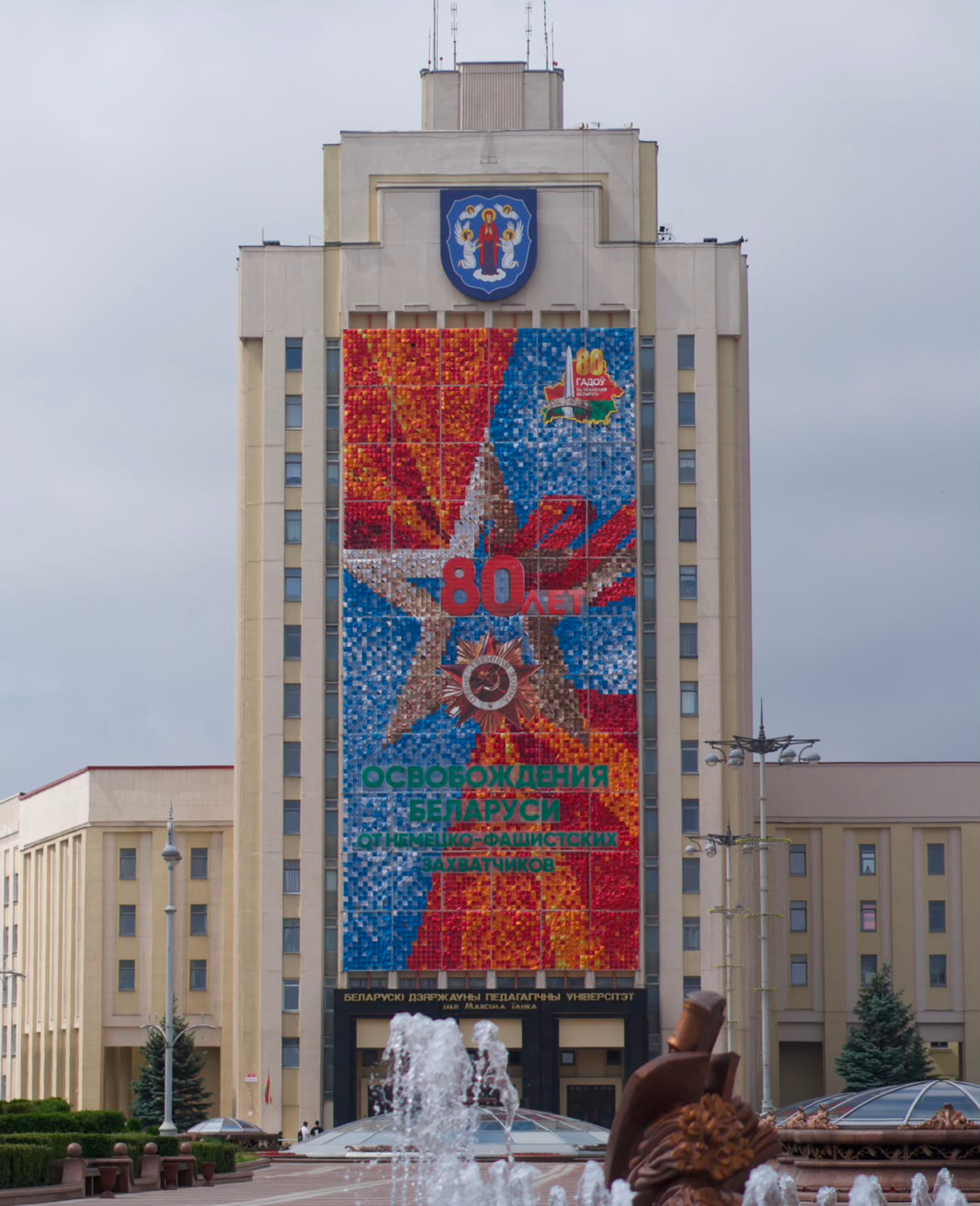
I'm from New York. I was born and raised in Brooklyn, so was my dad. So that's probably the largest part of who I am and who I consider myself to be. My mom – originally from Belarus – immigrated there, I think she was 19 when she immigrated. She met my dad there, he's Puerto Rican, but he’s been there his whole life, and his dad before him was also in New York. So it's been a long time there.
I think I would always consider New York to be my home, even though at a certain point when I hit about 18, I made a relatively spontaneous decision to leave New York. I knew where I was going, but I didn't know much about it. I didn't know what would happen in the years to come, I couldn’t have predicted anything since then at all. But I made the choice to move to a country that I didn't know so much about, the Czech Republic. Prague was a completely different experience in every way. It wasn't my first time abroad, I'd been to Europe a few times; to Russia as a kid, to Belarus and Italy a few times, France many times, because my mom loves France. So it wasn't my first rodeo abroad, but it was my first long rodeo.
But when I moved abroad, I began to spend time really comparing the place that I grew up with the place that I now lived in. I compared pretty much everything: the people, the food, especially the infrastructure. This was when I really began thinking about urban planning, for example. Then I lived in Japan for six months on a study-abroad. Japan was something that I had internalised for a long time, because I spent a long time in New York studying Japanese and immersing myself in Japanese culture, history, and literature. I really loved Japan in a very deep way, but then I moved back to Prague, finished my degree in Prague, and then I moved to Geneva, in Switzerland.
So I have many places that I can call home. I have a very deep attachment to Belarus and Belarusian culture and people, especially because of where I grew up in New York; it's a place called Brighton Beach, in Coney Island. Coney Island is diverse enough, Brighton Beach is very diverse. It's quite divided, and a large part of it is very Russian. It has a lot of people who emigrated to the United States throughout Soviet history, and when the Soviet Union dissolved, a lot more emigrated to the US and settled in Brighton Beach. So right now, it's a very Russian, Ukrainian, and even Belarusian neighbourhood. I grew up in an environment where Russian was very commonly spoken. You can walk around Brighton Beach nowadays and most of the signs you see are going to be in Russian; most don't even have an English translation. It's a phenomenal place. The demographics have changed over time, and even nowadays it's a different place than how it was when I grew up. When I grew up it was very Russian, nowadays it'd be easy to find plenty of Uzbek restaurants, Turkish cafes, and Uzbek grocery stores. So it's a different place, but it's a beautiful place, and it's very diverse.
Belarusian culture has been a part of me, even though I don't look Belarusian at all, so going to Belarus is always an interesting experience for me. It's hard to describe, going to a place where nobody looks like you or grew up in the environment that you did, yet you know so much about them, and feel like you're one of them. That's always interesting to me.
I was connected with Puerto Rican life as well, even though I spoke Spanish way less growing up. I was around a lot fewer Puerto Rican people growing up, besides some of my closest family members on my dad's side, who I would talk to and see very frequently – but it wasn't like I talked to them in Spanish, it never really happened. There's a part of Brighton Beach which is very Puerto Rican. Puerto Rican, Cuban, and Dominican… and those cultures make themselves heard, that's for sure. They're very loud in a great way, very eccentric, and very colourful.
So the place where I grew up really is where those two cultures came together, and they collided very often. If I connect it with my own experience, my ethnic background, it's hard to find another place that's more home than that. That really is the only place in the world where I can go outside and see Puerto Ricans and Belarusians border each other directly and think, ‘Yeah, that's me. Those two sides are me’. I think there are plenty of people in my position who may not have connected with either side that much, and I've tried to work on that over time, having this close connection to either place. So in short, that's why I would call New York – and specifically the place that I grew up – home. It's a real collision of cultures, but it just so happens to be the collision of cultures that I am. To call either place individually home would be very difficult for me to do.
What do you mean by either place?
To call Belarus my home, to call Puerto Rico my home. If I were to go to Puerto Rico, I think I would look a lot like the people there, more than any other place. I have the Puerto Rican skin colour, I have the Puerto Rican facial hair, if I let that grow – just a goatee. You can tell I'm Puerto Rican, just by the goatee alone.
But in neither place I would connect on a spiritual level. I think there are a lot of references from either place that I wouldn't know. You go to school somewhere and there are a lot of references that only the people that you grew up with know. If I were to go to either Belarus or Puerto Rico, most of the people there would have those connections with each other that I, as a first or second generation American in New York, would not really be able to relate to.
Are there ways in which you feel connected to Puerto Rico and Belarus then?
I've always felt more connected to Belarus because first of all, there are the very clear civic identifiers. I have a Belarusian passport, which is a very clear identifier of my nationality and my identity. But Belarus is actually difficult, because if I were to list out everything that I identify with Belarus, really it's all just Russian. Not much is super unique to Belarus; I think most Belarusians, even those who grew up in Belarus, would have that similar experience where a lot of the culture and media is all Russian. But I've also been to Belarus many times. I don't really have any clear memories of Russia, but I do have many, many memories of Belarus, so that ties me to that land in a way.
Puerto Rico is even more difficult, because we go to Puerto Rico on vacation; it's very beautiful, but it's not a very authentic Puerto Rican experience. We didn't go to San Juan and participate in Puerto Rican parades and whatnot, so that connection is much harder for me to make explicit, I suppose. The connection there would be that Puerto Ricans are very good at national pride, and showing themselves off. You’ve got Puerto Rican Day parades in New York, and there's something special about Puerto Rican music dominating the Latino music scene. Most of the artists that people think of when they think of Latino artists are Puerto Rican. There's something special about that. You see the place that you're from on TV, it makes you feel something. But if anything, for me, I don't see all that and think to myself, ‘Wow, I'm so Puerto Rican’. I think to myself, ‘Wow, this is a great reminder of the things that I could potentially identify with if I work a little bit harder to do that’.
Do you always just tell people that you’re from New York then?
I would always say that I'm from New York. Nowadays, I'm more likely to just say I'm from the US, and then I'll say I'm from New York afterwards. But saying that I'm Puerto Rican and Belarusian… part of it is the novelty, saying that I'm Belarusian and Puerto Rican is always fun, you know? A lot of the time I would just say I'm Puerto Rican, and then if somebody in the room speaks Russian, I like to talk to them in Russian, and then I'll say that I'm Belarusian. It's always a good time to do that.
I think the fact that my parents have roots in these places is a very simple way to identify who I am, but if you dig deeper, it's kind of just not the case. My Puerto Rican side has a very strong Boricua, Native American, Taíno root to it. There's also the slave trade that went into, you know, creating me. A DNA result can show that – it's all West Africa in there.
The Belarusian side is hardly even Belarusian. It's Russian, mostly, and then Polish and Czech. That came together about three generations back; they settled in Belarus and then that became the Belarusian identity.
Can you tell me more about your parents’ experiences then, in contrast to yours?
Yeah, my mom didn't really grow up in Belarus. She lived in Belarus and she was born in Belarus, for sure. But when Chernobyl hit – April 26, 1986 – she moved to Georgia, and she lived there for a number of years. I think she ended up living there during her most formative and memorable years, so she has very fond memories of those. Her childhood memories mostly consist of Georgia, and then she left because of the war in Abkhazia. I think she went back to Belarus for a bit, and then she went straight to America. She was already in her late teenage years. So if you talk to her, she won't call herself Belarusian at all. She'll acknowledge it, but she doesn't identify closely with Belarus as much as she does with Russia. She wouldn't call herself Georgian either, because she doesn't really speak the language, she only remembers a bit.
But my grandparents still live in Belarus. My closest cousin still lives there. It's good to know that I have family there that I can visit. They were all born in Belarus, so that'll always be there, even if my mom kind of has a fluid identity herself.
My dad wasn't born in Puerto Rico. He was born in Brooklyn, lived in the Bronx, and then in Brooklyn again. He's been to Puerto Rico many times as a kid, and he speaks fluent Spanish. He speaks… you know, they say ‘Spanglish’. His Spanish is a real mix of English and Spanish. I don't know how well he would fit in a really, really Puerto Rican crowd. But the family that I have very closely identify with Puerto Rico. They have family there, and they'll participate in the Puerto Rican Day parades. Along with many other Puerto Rican families, I have family in Florida, New York and Puerto Rico. Most of them I don't know at all on that side, but they're all there. They very closely identify with Puerto Rico, and they love the flag. So that's where the Puerto Rican comes from.
You mentioned comparing the places that you've lived. First New York, and then Prague, Tokyo, and Geneva. What have you derived from that? What have you noticed about those places?
When it comes to pure diversity, I don't think there's anywhere quite like New York. You've got all the little ethnic groups, and they've all huddled together in a little corner of New York. You have dozens and dozens of them. It's possible to roam New York for a day and eat Algerian food, go to a Moroccan clothing store, then right next door have gulab jamun, walk for two minutes to have Mexican food and dance with Puerto Ricans, take a train for 30 minutes to your Japanese neighbourhood, and then go south and you're in South Africa. New York is great like that, I struggle to think of another place that really comes close. There are some places that, for me, resonate with that mentality and that lifestyle. I think places like London really resonate with me for that reason. Even Paris, to a certain extent as well.
Tokyo is certainly not like that at all. I mean, it's the most homogenous country on earth. Prague is certainly a diverse place as well, really international. Prague has its Vietnamese quarter, Sapa, which is a beautiful place. You go to Sapa and the signs are hardly even in Czech, much less English. So that's a great place. I appreciate when cities can do something like that. Geneva is also extremely international; sometimes they tell you that there are more international people in Geneva than Swiss people. But you don't really feel that as much as in those other cities. You can really feel a strong domestic culture that's emphasised in the city when you're walking the streets.
I really like cities: I enjoy studying cities, the way cities are planned, and the way they come out and express themselves. What I've taken away from them in general is a hard question to answer, because there are many things that I take away from cities in different ways. I'm someone who enjoys a fast-paced city. New York is a very fast-paced city, and I think Paris and Tokyo are as well. Other places like Prague and Geneva are certainly not. There are things I take away from cities urban planning-wise, but I'll stop there, because there are many things I take away from cities in different ways.
Is there anywhere that you think you would stay forever?
It's hard for me to conceptualise what forever would look like, I can only really conceptualise where I would live right now. I mean, there are many places I can conceptualise retiring. We just went on a trip to Dalmatia – I'd retire in Dalmatia. That seems like a great place to be. But if I went to Alaska, I'd probably want to retire there as well. London seems like a beautiful place to live. Another part of me thinks about how amazing it would be to just spend the rest of my life in a dacha in Gomel. All of it sounds super enticing to me. So, where I would actually live the rest of my life is a question that I answer differently every hour of the day.
There are certainly places where I’d probably not want to live. Nowadays, my family lives in suburban Tennessee. I don't particularly see myself ending up in suburban Tennessee anytime soon. But rural Tennessee, maybe. If it was a really rural lifestyle, I could foresee myself living there and probably enjoying it.
There are cities that do things right to me. Amsterdam, for example, does just about everything correct when it comes to urban planning. It's really an ideal city, but then there's everything else about Amsterdam that I probably wouldn't be able to resonate with on a cultural level. Do I see myself living the rest of my life in the Netherlands? I don't know, maybe in some suburban Dutch town, that wouldn't be so bad.
There are parts of Japan where I remember feeling mesmerised in a way that I haven't anywhere else. I went to Hokkaido, to a few towns, and that was a place that blew me away. It was a very slow-paced life. I know I just said I enjoy a fast-paced life, but when I think about forever, that's something that seems much better. I couldn't really see myself living forever in Manhattan, for example. It would be something between suburban and rural, but country-wise, I'd be very open.
I think I no longer have any attachment to any of the places that I've been to. I don't really have the drive to retire in New York, to live the rest of my life there. The places I've been to… over time they've each meant a little bit less and less to me, in terms of being places that I would dedicate myself to trying to stay in for the rest of my life. At this point I feel quite fluid and mobile.
Given how fondly you talk about New York as your home then, why is it that you think you'd be comfortable leaving it for potentially the rest of your life?
Because ‘home’ is a completely abstract, constructed image that I've manufactured as a way to encapsulate my past and my memories. That's where home is for me. I think about all the things I've done in New York: the places I've seen, the things I've experienced, the food I've eaten, the art I've seen, the books I've read, and the music I've listened to. A lot of my memories, I've made in New York. So I will never be able to disassociate those memories from New York. Home for me is a past.
Nowadays I would call Geneva my home, because I live there. I could write that Tennessee is my official home, because that's where my family lives. It's all quite fluid, and ‘home’ to me doesn't really coincide with the place that I see myself ending up, it's just the place that I've grown up in the most.
You’ve talked specifically about New York a lot more than the US as a whole, but New York does fit into a broader American cultural identity. You’re talking about being Belarusian, Puerto Rican, but not really about being American. How much of an overlap is there between being from New York and being from America? How does that fit into your identity?
To say ‘I'm not American, I'm from New York’ would be very pretentious of me, but that's exactly what I'll do. My family don't live in New York anymore, and it's very hard for me to go to New York nowadays. If I do go to the US, I go to where they are, and that's suburban Tennessee. So I've been forced to confront a different sort of America. This southern American lifestyle with twenty-lane superhighways, and Buc-ee’s, and all these big Walmarts and chain stores. To me, it's slightly miserable, I don't really feel like any of that is a part of me and my identity, and I don't know how many Americans would feel that way.
I think a lot of Americans sympathise or feel nostalgic for a certain way of life. I can understand it; there's this American image that’s very popularised on TV. You've got your high school proms, for example, and people show up in their trucks to the parking lot and drink there, and they go into the drive-in movie theatres and watch the movies from their cars. They hang out in the Walmart parking lot at sunset. Just driving through country roads in your Ford pickup, you park somewhere and sit in the back of your pickup and drink a couple of beers.
So much of that, I think, is what a lot of Americans are nostalgic for, and I didn't have much of that growing up. My version of that was riding the subway at five in the morning with some drug addicts and a couple of rats next door. I mean, that's a type of America. I can imagine some other places that might sympathise with that. Maybe some people from Chicago, Atlanta, California.
But then again, I think the ethnic diversity in New York plays a big role. A lot of my childhood was spent exploring other cultures, and I think a lot of Americans really haven't done that. Not because they wouldn't want to, because they haven't really had the opportunity to. When you talk to other Americans and you tell them that you're from New York, a lot of time they say they wish they went to New York because they'd love to see that. It's a very different kind of America. It's made me a lot more comfortable being abroad as well, because not many things are super novel to me. A lot of it I've experienced before, on a micro scale.
So calling myself an American is a weird thing. It's just a way of identifying with other people who are from America, a way of justifying my accent, and a way of saying, ‘I participate in the same political discussions that you do’, to other Americans. But I think talking to people around the world, it's easier to say that I'm from the US, and then if they ask where I'm from, I say New York and it goes from there.
Also, on a deeper level, I think there's something beautiful to America. Being maybe the most geographically diverse country on Earth, there’s a lot to see, and there's something to really enjoy in being able to call yourself a person from that place. It's a special thing.
Do you switch up where you say that you're from depending on who you're talking to then?
Yeah, absolutely. Absolutely. If I'm talking to an American, it goes straight to ‘I'm from New York’. If I'm talking to somebody outside of America, I'll typically just say I'm from the US. If I'm talking to a Russian person in Russian and I haven't introduced the fact that I'm from the US, I'll say that my mom's from Belarus. Not that I'm from Belarus, but that my mom's from Belarus, and then that associates me with being Belarusian. Then maybe the conversation will go a little bit further, and then I'll say ‘well, actually, I grew up in New York’.
What would you say makes New York unique within the US and the world then? It has such an enormous cultural output: what is it that's behind that?
There are so many ways to go about answering that. I think within the US, it stands out in many ways. There are many things that I think other cities in America do equally well, if not better. One can argue that Chicago, for example, has better architecture than New York. But people really immediately recognise the New York City skyline, it does stand out in that way. Then there's the infrastructure, which is at the top of my interests. New York has the largest metro system in the world by area and by stops, so that's something that I am happy about. I could take pride in that, actually. It's a very unique thing for the world, but then you think about it in terms of America… It's really a miracle that a city in America could have such accessibility by metro. And then a bus map of New York is just a sea of colours, you can't even see the streets because it's all covered in lines. All of New York is incredibly well connected. I think for someone who's growing up in America, who doesn't have a car, who is willing to go out and explore on their own, there's really no comparison to New York. You can't really have that sort of accessibility anywhere else. So I think that makes New York special in America.
I think of a lot of stuff on social media, a lot of the videos of the New York City subway, the rats that are romanticised, the craziness. A lot of people associate New York with the crazy things that go on there. I think the average New Yorker who commutes on the subway would have enough stories to fill weeks and weeks of pub talks. A lot of that is very special about New York, I would say.
You've got music from New York – I think there are artists from New York who define multiple successive generations of artists and genres. What most people would think of for New York music probably depends on your own taste, but what comes to mind for me would be New York rap. There’s this really active rap scene, and some of the biggest names that come to people's mind immediately – Tupac, Biggie, Nicki Minaj – are from New York. They defined a genre and really created rap as we know it today.
The art scene is super powerful in New York. My dad was a graffiti artist in New York in the 80s. During that time, graffiti was a really powerful form of expression. Even if it wasn't explicitly political, the idea of being able to display your art so publicly, cover a train car, and have it run over the city so that everybody in the world can see it is pretty anti-establishment. There are really so many cultural outputs worth talking about. There was certainly a blend of very powerful artistic movements. A lot of artists from the UK would come to New York and get together in these very well-known clubs. David Bowie would be there, and the Beatles, Lou Reed, Andy Warhol, maybe Marc Bolan, and they would all be mingling with each other and creating music and art. It was a very underground scene. There was a very live and active transgender movement happening at the time, and these forms of expression were pretty novel. I think people really started making art about these kinds of people around that time. A lot of that was born in New York City.
Back to the Puerto Rican, Belarusian side of things – that to me is a very unique cultural overlap. In your experience, is there anything that those cultures share with each other? Do they blend together and assimilate into one thing in your mind, or are they very separate to you?
I think I've learnt that most cultures are not so different from each other. Most cultures in the world do very similar things and just call them something different. I could easily say that a very big part of Puerto Rican culture is to be able to come together as a family, make a lot of food, say your prayers, and enjoy a big meal and share food with each other. Sure, that's really big in Puerto Rican culture, but everybody does this. Belarusians certainly do this.
There are things about Belarus that I could call unique. Maybe the clothing, the vyshyvankas, which are traditional Belarusian garments. They're very beautiful, but you know, they look a lot like Polish garments or Ukrainian garments. You could probably tell them apart, but they're very similar. I think Belarusians enjoy having a blend of Russian and Polish in their mode of life and the things that they eat.
What's similar between them? I think a lot – things become really similar when you think of the countryside. Cultures can seem very different from each other if you focus on things like language, or if you look at flags or museums. But I think as soon as you step into most countrysides, things really start to look the same. If you can speak two languages from two different cultures, so you don’t have a barrier to talking with people in the countryside, those similarities really do stand out.
Of course, there are going to be some things that are different in the cuisine. Puerto Ricans might eat a lot more fish – Belarus doesn't exactly have a huge seafaring culture in the way that Puerto Ricans do, there's no embedded historical memory of island-hopping in Belarusian identity.
As someone who didn't grow up going to school in either of those places, it'd be hard for me to say what the people themselves learn throughout their school life. That's going to be a big part of talking about cultures and national identity: the things that people learn in school, the markers that they personally choose to identify themselves with. For example, in Puerto Rico, there’s always been this Boricua movement and identity, which stems from the Taíno word for the original name of the island of Puerto Rico, which was Borinquén. So if you have native Taíno heritage, that's a very deep marker of Puerto Rican identity. In a place whose independence is threatened on a daily basis, that becomes even more important. When you identify with the people around you, that creates a stronger foundation to then have your own independence.
With Belarus and Belarusians, it's a lot more divided. There's not a western and eastern Puerto Rican identity, there's just a Puerto Rican island identity. In Belarus, that would be much different. There's no part of Belarusian identity that's common to everyone stemming from a deep Belarusian cultural heritage. People from western Belarus who have more Polish heritage might identify with more Polish aspects of life, and eastern Belarusians are much closer to Russian identity – this would actually be very similar in Ukraine as well – and then northern Belarusians might identify with a more Lithuanian identity. So those make Belarus an interesting case. There's the language issue in Belarus as well, where a majority of people don’t speak Belarusian on a daily basis. It's not an endangered language, there’s a very large speaker base, but it's not a lingua franca within the country, so that makes it hard to unify people.
Of course, there have been bouts of Belarusian identity. The white and red flag is a big part of it; that was really big during the protests in 2020, where people came together with this new image of being Belarusian. That was done by digging up old memories of the past, of the Grand Duchy of Lithuania and Belarus, and picking up those pieces of Belarusian identity. Picking up pieces of war-torn Belarus, where Belarus lost the most people as a proportion of their population during the World Wars, and trying to construct a new Belarusian identity around that.
Then again, Lukashenko has done a similar project in a different way. Constructing a different image of Belarus, with a different flag. One that can coexist with Russia, and that speaks to a different base of people. So Belarusian identity, I think, is a lot more factionalised than Puerto Rican identity.
Turning back to the places that you've chosen to live – Prague, Tokyo, and Geneva – why and how did you end up at those places? Why did you choose them?
When it comes to the first place I moved to, Prague, I say a lot that there's the nice-sounding reason and the real reason. The nice-sounding reason is that I wanted an international experience. My family was moving out of New York, so I was put in a position where things were changing very quickly, and I could make a change to my life if I wanted, and move abroad. I didn't know so much about Prague or the Czech Republic, but I knew it was closer to Belarus than New York was, so if I wanted to go there, it would be a bit easier to do that. I knew it was very central in Europe, so that was a big selling point; I could really move around.
But the real reason was that I didn't really get the chance to study in the US, even if I wanted to. The school that I had gotten into in New York would be twice the price because my family was just about to move out, and there were no schools in suburban Tennessee that I really wanted to go to. I had decided to study International Relations, as a mixture of the domestic politics that I was interested in and all the international cultures I was interested in. So Prague came about through desire, but also just necessity. I had to move abroad somewhere, and Prague was accepting applications in May.
But since then, the places that I've moved to have been much more intentional. Japan was a big part of my life because I had consciously made it that. I didn't grow up going to Japantown all the time, I went to Chinatown, I spent much of my high school days in Chinatown, and I spent maybe six months learning Mandarin. Then my friend mentioned to me ‘Have you looked at Japanese at all?’. I hadn’t, but then I started really getting into it. There were a lot of Japanese authors and philosophers that I had read and admired growing up, like Murakami or Fukuzawa Yukichi, so I thought ‘This would be really nice if I could read it in Japanese’. I spent some time listening to Japanese, and I thought ‘Actually, this is a very beautiful language’. So then I decided to study it. Then, in Prague, I decided that this is a good time for me to go to Japan, when I can study abroad and I have the resources to do that. I went there, and I think that changed a lot of my perspectives. That was my reason for going to Japan. I knew I wanted to make my experience as… in a way, as romanticised as possible, and I ended up being able to get that.
Since then, I went back to Prague, and then I had to make a choice about where I wanted to go next. I decided to continue studying International Law, and international law isn't a big priority in many places. In the US, that's a difficult thing to study. There are really three places where that's prioritised, and Geneva is one of them. So I thought it might as well be in Geneva; that's probably the place to do it. There was nothing about Switzerland that had called me particularly. I knew that French was a language that I could more reasonably pick up than Czech, so that was a slight driving factor, but I think beyond that, there wasn’t much else to it.
You mentioned studying International Relations and then International Law. What is it that drew you to those, and were there any alternatives you were also drawn to?
There were certainly alternatives, but before I get there, International Relations as I briefly mentioned earlier was a blend of two things to me. I enjoyed talking about domestic politics in the US, and I really enjoyed cultures and languages. That was something I was passionate about. This whole thing I mentioned about Chinatown and learning Chinese, and growing up in a mixed Russian, Spanish, but mostly English household. I admired all of that, and I put the two together in my brain and said ‘what would that reasonably look like as a way to do both of those at the same time?’. International Relations just came up as the natural product of that. I did very much enjoy world history, so it felt very natural, and nothing else really spoke to me on that level.
The alternatives weren’t remotely related to politics at all, they were just things that I've been interested in and love nerding out about but didn't see myself studying. In retrospect, I don't really know why that was, that was just how I felt back then. That would be things like marine biology, and other subjects like physics or chemistry. I've always loved space, I would have loved more than anything to continue studying astronomy.
International Law was a weirder one, because throughout studying International Relations, I felt like it was just a slightly glorified political science degree. I think politics can be very abstract. A lot of it can be looking at the same issue, through two different life experiences, and coming to different but equally reasonable conclusions. I'm hardly the first to say that, but law for me was a way to ground things on a different level.
If you know law, you have a much better way to ground your opinions based on reality and power. Power in a very real sense comes from law. The people who enforce, set, and follow the law are three different groups, and knowing how to differentiate them was, in my mind, the best way to understand society. In retrospect, that wouldn’t all be entirely accurate. There's so much more to it than that, but that was a good starting point for me. I felt like law would be something much more practical, and of course, I was thinking about jobs in the future. I shouldn't not bring that up; trying to find a job was a big thing.
But I wanted to keep the international bit. I enjoy studying International Law, and I took a Humanitarian Law course in my first year in my undergrad. That course, taught by a Hungarian military lawyer, was a very enlightening experience. The things he was talking about were very interesting, about wars and things that are allowed in wars. This was, to me, a new way to understand the world, and to understand politics in a way that's centred on the people on the ground. International Law as an interest was born from there. Of course, I should mention again that the job market was always another factor.
Other than what you're studying now and what you've considered studying instead, Do you have any other major passions or interests?
Growing up, I tried a lot of things, which I'm very grateful for. There are many sports I did, and tennis has always been the most present. I did in the past few years have some injuries which have rendered me unable to play tennis today, but tennis was a big passion of mine.
Besides sports, I would say art in many ways. I did acting in my middle school, and outside of school as well. I studied Fine Art in high school. I went to the School of Visual Arts in New York as well – a different school – to study art, and I did painting and wood carving there. I really focussed on art, I did many types of art. I think a lot of where my passion lies today is creative, it focuses around fine arts, and around literature and the spoken word as well. Music has been a large part of my life. I grew up playing piano for many years. I always loved improvising, even though I never formally studied the art of improvisation. I just loved creating music, whether or not I knew the theory behind what I was creating.
When I moved abroad, I couldn't have a piano with me, so I kind of stopped playing music for a bit, and that really messed with my psyche. I felt like I needed a way to play music. My parents were able to bring me my guitar from the US to Europe, so I’ve carried my guitar with me since. I love guitar, but at the end of the day, I'm not as technically talented as many other people are. Improvisation for me is very important. Art for the sake of art itself is very important for me.
In a more specific way, creating music, writing music and poems was important to me. Reading and writing in other ways as well. I enjoy writing thought pieces, and fictional narratives here and there. A personal goal for me would be to write more short stories if I can. Nowadays I'm painting a lot more as well, so painting would be really big for me.
A big one that I haven't mentioned is birdwatching. I love birdwatching, I really picked up that passion in Japan. That to me has been a very therapeutic thing. I love drawing birds as well, and maybe I'll write a poem about the bird that I drew that day, so all of that comes together in a way.
Why do you think that you feel that drive for some creative or artistic output?
I think the world is disjointed. It’s also quite bland if we don't make art for it. We, as humans, are constantly interpreting the world around us. We have to, there's no way we can't. So I think if I constantly interpret the world in a way where I don’t output creatively, I enter into an unhealthy mental state. I just don't feel great. There's something about it that's very instinctual, and it'd be hard to rationalise it.
I think everything today is so focussed on being as productive as physically possible. So if I go birdwatching, I've spent half the day out, and the fruits of that are just that I've watched two birds fly and make some noises. But if I didn't do that, I feel like I would probably go crazy at some point. It's the same thing with writing as well. If I have an idea, I'll write it. It'll be this instinctual thing, and there's no real way to justify it.
It's never really so consistent, but it has to be there. A wise man once said it, and I'm going to butcher it, ‘If you're deciding whether or not you are an artist, it's a very simple thing. Either you make the art, or you jump off a bridge.’ For me, that's it.
Lastly, when you're thinking about the artists who have inspired you – no matter what medium they work within – are there any who stand out to you from your own culture, whatever you interpret that culture to be?
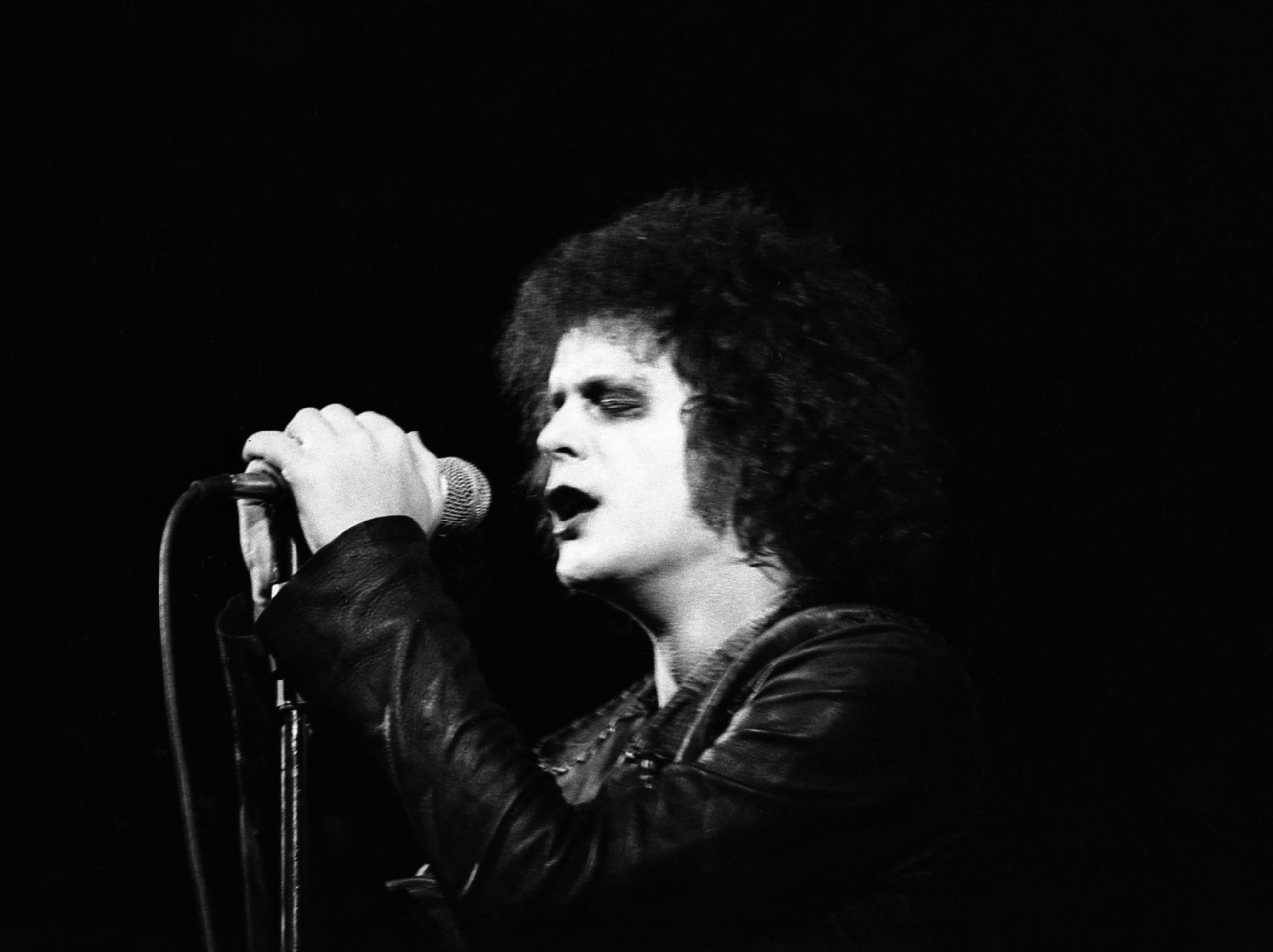
Well, it'd be bad if I didn't mention my favorite lyricist of all time, my favorite artist, which is Lou Reed. This would be New York culture, really. Lou Reed was born in New York. He moved around a lot, but he was born and raised in New York. He was part of this Andy Warhol group of people, he made songs about the disgraced in society, the people who weren’t really talked about: the drug dealers, the gays, the transgenders. He made one of the first songs in New York, and in the world, which detailed the experience of a transgender person. He created that image, and the ability to discuss that. He created the mainstream ability to discuss the raw and the vulgar.
The way he describes New York is perhaps the best depiction that exists in media, depicting all the things I've mentioned already. Talking about that raw experience, the sadness and hope that comes with living in a big city, what it means to have a home, and the artists that inspired him as well. All of this comes up in his music. I also really enjoy his singing style; someone said that Lou Reed can never hit a note, and if he does, it's the wrong one. He's really not a very talented singer in terms of his vocal chops, but his songs are unique, and I can listen to him forever and never get tired of him.
I think when it comes to people from Belarusian and Puerto Rican cultures, I can fully admit that I don't keep up with it as much. It's a part of my life that I've thought about recently, that I would need to improve on this sort of information. That's why I'm trying to polish my language skills, so that I can unlock this new dimension of cultural knowledge. There's less of a language barrier in Russian, but there was definitely a language barrier in Spanish.
There have been Russian groups and Russian singers that I've really been inspired by. I've always been very inspired by Viktor Tsoi, by Kino. For me, it's a very inspirational group. First of all, his lyrics are beautiful, very poetic, and I admire them. Even though he wasn't an explicitly political figure, his lyrics were commandeered for political purposes. I admire a person who can write lyrics about their own life, and about experiences that are very common and average, and have those lyrics be interpreted in such a way that can have such a powerful effect on politics.
But of course, he's not Belarusian. And really, the same goes for Puerto Rico. Maybe I could name more Puerto Rican artists, but I wouldn't really say that, for example, Daddy Yankee has inspired me as a person, as much as I like Daddy Yankee's music. If I talk to my dad, he could certainly name a lot more of those artists that he grew up listening to, and maybe those that inspire him. But even then, the things that he outputs creatively don't really seem to be inspired by his Puerto Rican cultural heritage.
So if I were to name a Puerto Rican artist that really inspired me, I would just name my dad. I don't do the same art that he does, he does graffiti and lettering. He's very talented in all types of art, but that's mainly what he does. The art that he made growing up had a big impact on my desire to do art, and probably also some of the art that I try to make sometimes.