Glòria
In your own words, where are you from, where did you grow up, where are your family from? What's your background?
Well, I'm from Barcelona, and other than Barcelona, I would say I'm from Catalonia. Those are the terms that mostly describe where I come from. And yeah, my family, all of them are from Catalonia, my parents and my grandparents.
My parents come from Reus, it's like one and a half hours south from Barcelona. My parents met in Barcelona during their studies, and then my sister and I were born there, and we grew up in Barcelona, in the city. But we still have a lot of connection with Reus – it's a smaller city – because our family is still there. So I also consider myself from Reus as well, because my family actually comes from there. But yeah, mostly Barcelona.
Okay, do you see any cultural differences between these two cities?
I would say for sure, in the sense that Barcelona is such a big city, so there is no such culture as ‘Barcelona’, because nowadays there are more tourists or people that come from other places than actual Barcelonians that have been living there forever. So Reus feels more Catalan, or like… not Catalan necessarily, but it’s more on a smaller scale, and everyone knows each other a little bit, even though it's still over 100,000 people. But it feels different for sure, more traditional. There are still some traditions conserved there, more than in Barcelona, which is a cosmopolitan, metropolitan city.
And you're saying Catalan then – am I to assume that you feel more Catalan than Spanish?
Yes, indeed. Yeah, I feel like ‘Catalan’ represents me.
Okay, and Spanish is not even a second identity for you or…?
I would never say out of my mouth, ‘I am Spanish’ or ‘I feel Spanish’, but there are people that don't know the reality or the difference between Catalonia and Spain, and they would say, ‘oh, you come from Spain’, and then I wouldn’t say every time ‘no, no, no, no, I am from Catalonia’. But when I have the chance to present myself, I would always present myself as Catalan, or as Barcelonian, and not as Spanish.
So what would you say are the differences between Catalan and Spanish identity?
There are lots of differences. Historically, of course, when there were the two kingdoms of Castile and Aragon. These were two different kingdoms with different traditions, even different languages. And then they united, but the culture and the history has always grown separately, like it was never really unified. Even though the territory unified, the people didn’t. So I would say there’s a historical component for sure, and also a cultural one.
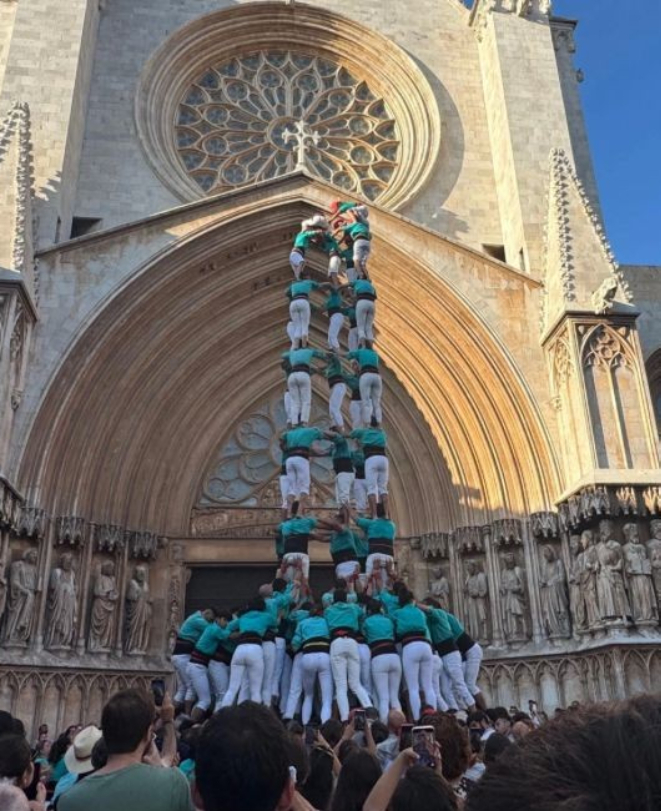
You just have to go there, like Catalan people in the way that they talk, and in the way that there are a lot of stereotypes that are specifically targeted to Catalan people and not to Spanish people. We have different festivities; we have different traditions for Christmas that only Catalans do. So there are different components that I would say differentiate us.
Is your connection to Catalan culture something that's primarily about the traditions, the language, or the place itself? What is it that makes Catalan identity an identity?
For me, definitely knowing the whole history and traditions, which is very linked to language. I would say language is one of the core characteristics. Catalan developed parallel to Spanish; we're all Latin languages, but there is still a difference, and from the language we have our own linguistic movements and our own ways of expressing ourselves. So I think that is a very important feature of Catalan identity.
And is the language similar to other Romance languages or is it quite different?
No, it's actually pretty similar. I would say it's a mix between Spanish and French. And in some cases, like grammar and how the words are written, it's closer to French than to Spanish, but the pronunciation is obviously very different to French. The pronunciation is closer to Spanish, but the way you write and the grammar is closer to French. So it's a mix.
Is there a standard Catalan dialect or is it very diverse?
Actually, Catalan Countries – you’d normally talk about Andorra, Catalonia, the Community of València, and the Balearic Islands – they all have their different dialects of Catalan. For example in València, they speak Valencian. It's Catalan, I understand them, but they have a dialect. In the islands it's the same, and even inside of Catalonia, the ones from the south or the ones from the north have small accents, but you would always understand each other. It's not that different that you would not understand it, they’re small dialects, but there is a difference.
Growing up there, is it easy to use Catalan as a first language, or is Spanish sometimes more predominant?
That's a huge problem actually. I remember in the past I could use it more broadly, but since 2011, let's say, when all the demonstrations started about independence, Catalan has been very much linked to politics. So very broadly, if you speak Catalan you're seen as independentist, and that harmed the Catalan language a lot, because a lot of people didn't want to speak Catalan because of politics. Before that it was actually very normal to speak Catalan in society, but nowadays when I go back to Barcelona? Forget it – I cannot speak only Catalan during the whole day, it's impossible, not even once.
In Reus or in other places, in towns, for sure I would say Catalan is still very very present. You can go through daily life only speaking Catalan, but in Barcelona that is not possible anymore. And that's very sad, because it has been politicised, and it's now actually in danger of starting on the way to extinction. I know it won't happen, and I really hope not, but it's in danger, it's a fact.
So in Barcelona is it the case that people still understand it but they don't speak it for political reasons, or…?
Actually it's both. There is this part obviously, but I would say that’s everywhere in Catalonia generally. In Barcelona specifically, the problem is immigration. Not a problem in the sense that I don't want it, but that it's really like that. Mostly from Latin America, since they speak Spanish – and in Catalonia you can also speak Spanish, because it's bilingual; normally everyone that speaks Catalan also speaks Spanish, except maybe older people in the small villages – and since they speak Spanish, they don't make the effort sometimes to learn Catalan, because it's also not required in a lot of jobs. In public institutions it is, but other than that, normally it’s not.
In Barcelona now also, the big, big problem we have is that a lot of people come as digital nomads, and they come for one or two years and they leave, and they obviously won't learn Catalan. And actually more than immigration, the problem is this temporary migration, these nomads that just come because it's a nice city and a technological hub, and then leave.
You mentioned that everybody who speaks Catalan also speaks Spanish. Is everyone perfectly fluent in both, or is Spanish more of a second language for some?
I would say in cities, not only Barcelona but around Catalonia, Spanish and Catalan are at perfectly the same level. For smaller towns where they basically only socialise in Catalan, then maybe I would say it's not the same, Spanish is more like a second language. But mostly they speak both the same, and actually the opposite is more problematic. There are a lot of people that speak Spanish and know Catalan, but since they don't practice it, actually Catalan is the second language, even though they're Catalans and were born there and raised there and everything. They go to public schools in Catalan, they learn Catalan, they know Catalan, but they don't speak it, or they consider it as a second language.
So in schools, media, things like that, is Catalan the predominant language?
In public schools it should be, but the fact is that it's not. There was also a huge debate about public schools actually. Last year or a couple of years ago the Spanish government wanted to impose that public schools should be taught in at least 25% Spanish, because they were considering that Spanish was in danger in Catalonia since they only speak Catalan. But actually, if you go to public schools – and I know because my dad works in one, and I have family and friends there – the reality is that even though classes in public schools should be taught in Catalan, if the majority of people speak Spanish, the teacher adapts to the pupils. So actually, I would be happy if only 25% of subjects would be taught in Spanish, but the reality is quite the opposite, most of them are taught in Spanish even though they should be in Catalan in public schools.
Where else have you lived outside of Barcelona?
I've lived in Germany for my bachelor's and now for my master's. I lived in Brussels for some months for Erasmus, I also lived in Mexico for almost a year, and now in Strasbourg, also for some months. As for living, I would say that's it.
Do you think that those experiences have had a big influence on you?
Of course, all of them. Yeah, yeah, yeah, definitely.
How so?
Very differently. I mean, it's not the same when you're eighteen and going to a different country as when you're twenty-three and going to Mexico. Germany was very much an experience that helped me mature a lot, because I was on my own at eighteen going to study. I didn’t have my parents nearby where I could go on the weekends, so there I learnt a lot as a person, and I also love my studies. Also, adapting to a different society. It helped me a lot to know myself, how I am and what I like.
For the other places, I would say everything was also growth, but from a more mature place, and more just from gaining experience. They all were very valuable experiences for myself personally, and also to know where I want to work in, what my passions are, and what I really want to do in this life.
And what is it that you're studying in Germany?
I'm doing my master's degree in International Relations: Peace and Conflict Studies in Frankfurt.
And what is it that attracts you to that subject?
Well, actually because I really like politics, and because where I come from in Catalonia, you're confronted with politics. It's always this tension between Spain and Catalonia and all the politics. So I was always interested in politics, and then I started also being interested in international politics, and seeing this feeling of injustice. I was feeling it while I was at school, like ‘why are things unjust?’, thinking about migration and wars. I thought ‘I want to do something to make a better world’, but I really do want to inform myself more about what conflicts are going on around the world, and which instruments there are now to influence them.
Do you speak German then?
Yes, I learnt it at school.
Do you speak any other languages?
I speak English, Catalan and Spanish obviously, German, and then I would say the one I speak worst is French. I learnt them all at school. When I was in Barcelona, I learnt them all at school, and then at university I continued with French.
Having lived both in French and German speaking countries, do you think that speaking those languages is an essential part of understanding those cultures, or is it more just a way of communication?
Communication is very important, to avoid misunderstandings it’s better if you share the same language, but I think culturally, if you're able to speak the language, you have more opportunities to engage in local activities. When I was in Germany, I knew many friends that came from Barcelona or elsewhere who could only communicate in English and not German, and they were very limited, most of them only had friends from their own countries. I also think Nordic cultures are a bit more closed, so it's even more important to speak the same language. The language tells much more about what expressions they have, how the humour is, how they express themselves. It tells a lot about how a society behaves, so I think that's important.
Catalan is also a very good example, because I think knowing the language tells a lot about the people. Which expressions they use, which references they make, that tells a lot about our socialisation and our history, so I think that's what makes it important for the culture.
With Catalan then, what does the language tell you about the culture?
I think Catalan language historically – just the existence of the language – has been a sign that we're a society that doesn’t give up. It's a culture that doesn't give up. During the dictatorship of Franco in Spain, Catalan was prohibited, so at school, or in the streets even, you could not speak Catalan. So for the people that speak Catalan in their families, in their houses, it was a sign of resistance, a sign that we're not giving up. Through history there are a lot of examples, and for me even the mere fact of speaking Catalan is a sign that I'm not giving up on this language, and I'm resisting. But it also tells about Catalan culture, like when I speak Catalan to my parents, just the tone of voice, how you speak, and the expressions you use, I would say that is a very Catalan thing. We have a lot of phrases for everything, we use a lot of expressions. It's very expressive, and that also characterises Catalan people.
Would you say Catalan people are quite open?
I consider myself open, but I wouldn't say actually that Catalan people are directly super open like you can imagine when you think about south Spain. Like Andalusian people, they would even speak to stones, you know? Like they would speak to a plant, they don't care. Catalans aren’t that sense of open, but I would say it's a very welcoming society. So I do think you get along, but maybe it takes some time.
And you said you were in Mexico for almost a year right? What were you doing there?
I was volunteering through a Catalan organisation that cooperates with three cities in Mexico that are all border cities. It's very much about the reality of the border, and the challenges and complications that come with the border. They cooperate with this religious entity – they're called Escolapios – and then we went there to mostly work on local projects with youth.
Would you say that religion is also an important part of culture to you?
To me personally, yes. I wouldn't say our society. In Mexico religion is very present, everywhere where you go. I would say even in Latin America generally. In Catalonia or in Spain, I wouldn't say it is at all, at least for our generation, but I would say for me it's important.
Why do you think it's not so important for most people in Catalonia?
Well, it's pretty obvious that there have been a lot of scandals. It's more linked to institutions, so if you link religion to institutions and not to faith, then obviously distrust comes, because humankind is corrupt and there are bad people everywhere. The institution is corrupting faith, so I think as a result of the scandals, it’s to go against that.
You've lived all over Europe – can you imagine yourself ever leaving Catalonia forever, or would you be drawn to go back eventually?
I’ve thought about it a lot, and I know that those are my roots, and I feel very proud of being where I come from, and I want the best thing for Catalonia. It's difficult, but at the same time, I think if I were to go back now it would limit me too. Because the reality is that there are not so many jobs, there are not so many prospects, at least in the sector where I am now. So I think yes, I would like to go back, but at the same time I've also been building my network and my friendships in Germany now, for example, so I also consider Germany as a place to live. I think someday I will go back, but for now I do think that for what I'm searching for in my life, other places can give me other opportunities.
Do you feel connected to Germany then?
Yeah, yeah I do actually.
Do you feel German?
No, not ever. I could never feel German even if I had the ID. As we have been talking about, it comes with an identity, it comes with a culture, it comes with a sentiment, and my sentiment will always be Catalan.
But I think the longer you spend somewhere, integrated into that society, the more that culture affects you.
For sure, I've noticed also from the first year I was in Germany to now, I do some things now that I would never have done in the first year. So I'm adapting to the German culture, but still for me Catalonia, and my family there, is an essential part of my being. I'm very familiar with it, so I always love to go back home and want to go back home. Of course, I could adapt and I could very much feel at home in Germany, but I would never feel German.
Do you have any examples of things that you've caught yourself doing in Germany that you wouldn't have done before?
Well, one silly thing about the weather – in Barcelona it never rains, so for me when it rains, I stay home. In Germany, at least where I was in Düsseldorf, it rained the whole time, and for the first month I was just not leaving home in the afternoons, because I was giving the excuse ‘no, it's raining, so I'm not coming’. At some point I realised ‘Glòria, you have to start doing things when it rains as well, because it's the reality here’, so then I started to accept the rain.
Do you have any favourite Catalan traditions?
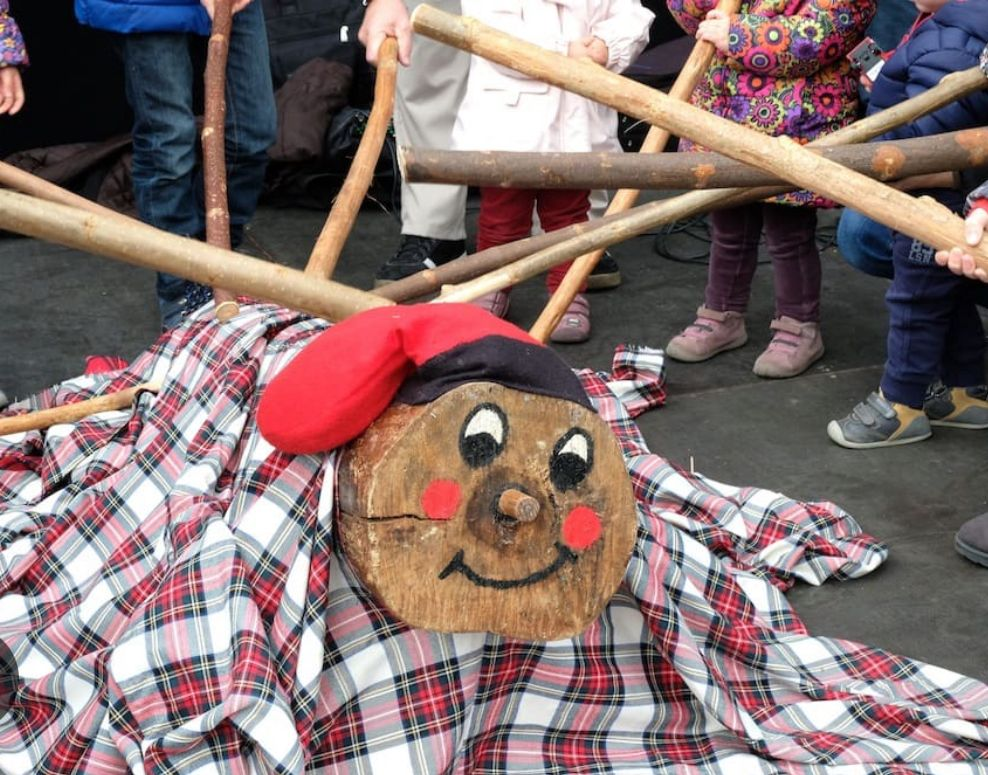
I have a couple, but I would say one of my favourites is on Christmas. It's basically a chunk of wood with a face drawn on – ‘caga tió’, it’s the chunk of wood and also the tradition – that you bring home one month before Christmas. You traditionally go, then, to search for them in the woods, and then you bring them home and give them food so that they eat a lot before Christmas. Then on Christmas Day, you cover them with blankets, go to the kitchen, and sing Christmas songs. Then you go back and hit them with a stick while singing a very specific song, and afterwards you open the blankets and see that beneath the blankets there are lots of gifts. So the logic is that the ‘caga tió’ has eaten so much that at Christmas he shits the presents, basically. It's amazing, I love it, we do it on Christmas and it's only in Catalonia, nowhere else in the world.
That's fantastic.
it is, it's very fun.
And that's in all Catalan regions or…?
I don't know actually, I don't know if they do it in the Balearic Islands, or in València. I know in Catalonia for sure.
What's the distinction then between Catalonia and the Catalan regions?
Catalonia is where Barcelona is, and Barcelona is like the capital of the Catalan Countries, and that's why Catalan culture has been pretty centralised in Catalonia only. Now they're trying more to also give a voice to Catalan singers from the islands, or from València, but normally the Catalan culture was coming from Catalonia, so that's why. It's also where it has been more preserved. For example, if you go to the south of València that's closer to Andalusia, there are places where they don't speak Catalan anymore, so that's why Catalonia is considered like the ‘capital’.
How do you feel about Catalan independence?
That's very political, this could be one hour more. I feel like every community has the right broadly to decide what they want to be, and I do think that Catalonia historically and culturally has grown separately from Spain, as I said, more than unified as part of Spain. So personally I am for independence, but beyond that, I am for the right of people to self-determination generally.
And when you're thinking about independence – not practically but theoretically – is this for Catalonia or for the Catalan Countries?
Andorra is already a country. So there’s not so much to do there [laughs]. They managed. I think again, right of self-determination, everything should go through the people. People should decide, everything should go through a referendum I believe. I haven’t thought about that, so I don't have a strong opinion on how it should look, but if people want it, then it should be, and if people don't want it, then it shouldn't.
So you don't necessarily feel so strongly attached to the other Catalan Countries, or…?
I feel kind of like brothers and sisters. Like we’re all the same, but I also recognise that historically and geographically there are differences. So I also acknowledge the right to self-determination, so that they can also decide what they want to be. But I do feel attached to Catalan Countries.
Okay. Just because you're talking about each community having its own right to decide, but then that kind of implies that those are different communities.
Yeah, that's true. But legally, they are different communities. We have autonomous communities, so Catalonia could only decide for Catalonia. If we wanted the Balearic Islands to be also on a referendum, the Balearic Islands would have to request a referendum to Spain themselves. So we're not unified now, it has to work separately. For now, because I was brought up and grew up in Catalonia, since Catalonia is the one concerned, then I'm fighting for Catalonia. If the Balearic Islands also want independence, I will fight with them too, but I cannot fight for them.
Would you say you’re close with Spanish people in the same way that you feel close to the other Catalan peoples?
I feel attached to people generally, and Spanish bonds us too because I speak Spanish, so there is a bonding inevitably. I have Spanish friends of course, it's not like I have hatred or something against Spanish people, no. So it binds me in the sense of the language.
But it's just because you speak the language and because you live there, it’s not that you feel close?
Exactly.
Okay. How would you compare the Catalan situation to the Basque situation?
Well I would say it's pretty different. Again historically, again with the relations they have with Spain, and the history with terrorism, and X and Y. It's very different from the relations that Catalonia has with Spain, and the history of Catalonia, so you can compare it in the sense of wanting independence, but it's a very different political struggle I would say.
Is there a sense of solidarity between those two communities?
That's the weird thing. I would think so, that it would be logical, but actually there is not so much. My intuition would say because the Basque Country gets much more out from Spain than Catalonia does. I think if the Basque Country really wants something it's more probable that the Spanish government will hear them, but the Catalan people not so much. I think also because Catalonia is more economically important to Spain, so they have more sentiment of keeping Catalonia than Basque. It's just a different relationship.
Okay. And the cultures are quite different?
Yeah, yeah, of course. I don't know Basque culture so much but I know it's very, very different.
Okay. Coming from the UK, I'd say there are parallels drawn in the UK between the case of Catalonia to Spain and Scotland to the UK. Is there anything from your side? Do you ever see that compared?
Yeah, you always see in the Catalan demonstrations on the 11th of September – that's our national day – there are always Scottish representatives with Scottish flags. Not so many, but some. And I don't know so much about Scottish history to be able to draw an analytical comparison, but I think there is a kind of comparison.
But for us it's always seeing Scotland as the big brother, in the sense of ‘this is how it should look’, and in our case ‘this is the reality’. Great Britain for us was a democratic country that gave at least one opportunity to the people to vote on their future, and with Spain we are not dealing with a democratic country as we compare it. They don't give us the choice to vote. So we always see Scotland as a success story, or at least that they're dealing with a democratic country.
So the situation in Scotland is seen more favourably then?
Well better in terms of… at least they could have a referendum. So looking up and working towards that, while knowing the realities are very different, the central governments are very different – like London from Madrid – the societies, and everything. But there is this belief.
Okay. Do you think there's some solidarity there then?
Yeah, yeah. Of course. There’s not solidarity in the sense that we really work together, but there is this collective solidarity where you would say ‘I understand you, I don't know so much about you, but I understand you at least’.
Are there any other cases that you would compare it to?
Well, there's always the Quebec one, but I think that is also very different. Other than that, I would say those are the most common.
Is there anything more you want to add before the last question?
I would just add that I've come across a lot of people who want to put this tension, like ‘you're independentist or not’ and link being Catalan with politics, or trying to create that tension between Spanish and Catalan, and for me it's not like a football team, you know? For me, you really have to understand the history and the culture everywhere. Not just in this case. But I think that's very important to understand, because there's never just black and white. There are always nuances and there are always good things and bad things in every decision.
So if Catalonia would ever be independent, of course that would come with risks. It's not an ideal society. We would also have a populist extremist right, because we're not an ideal society, it's pretty obvious. But it always comes with risks, so you should not prejudge without knowing. You should always get to know the culture and the people, and talk with whoever is actually affected by those decisions, or what you're going through. So I would say that is very important, to not just get the headlines, but to try to inform yourself a little bit more.
Last question then, could you pick out one artist from your culture – it could be a musician, author, writer, painter, anything – who really speaks to you, and connects with you on the level of representing your culture?
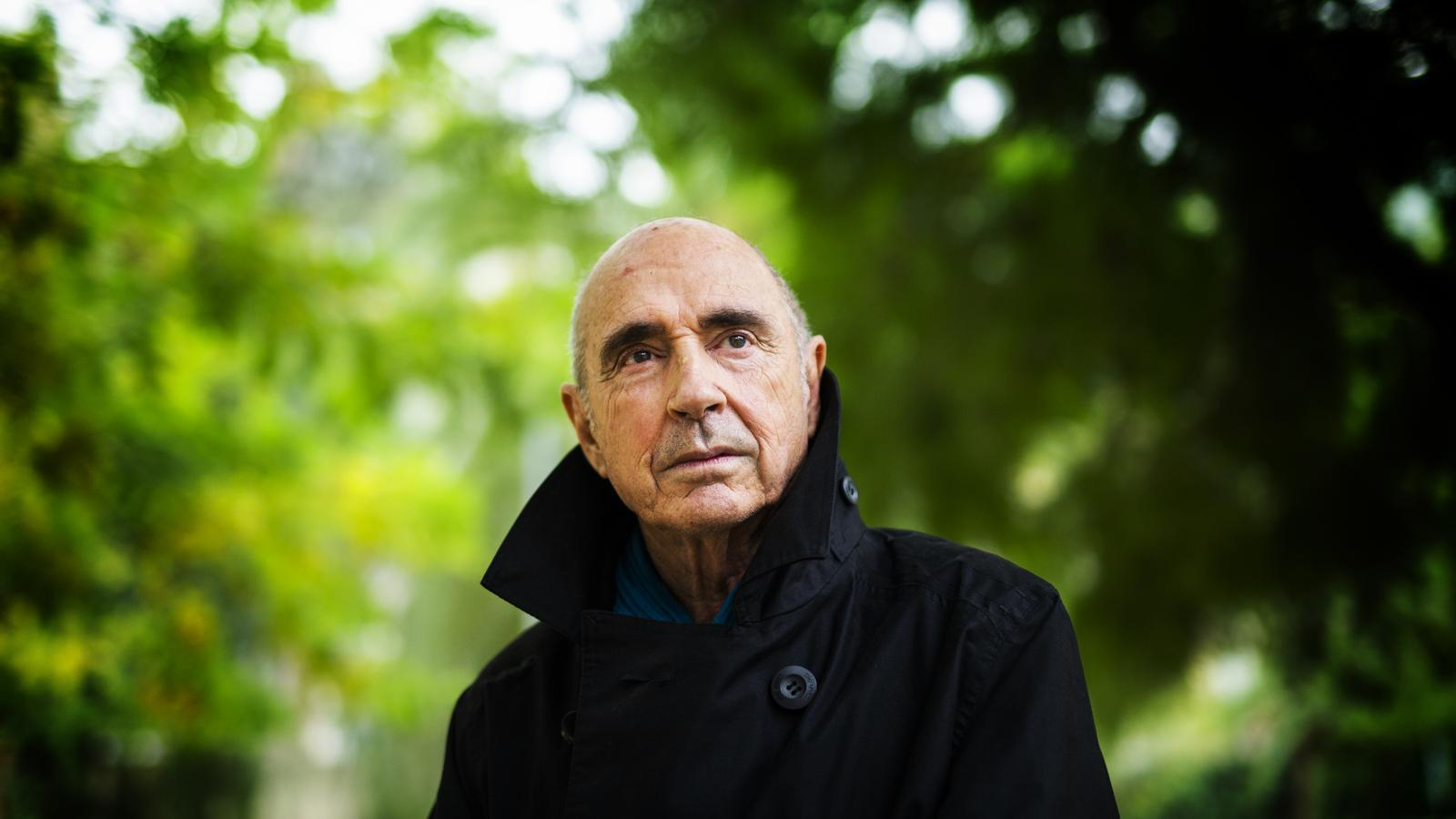
I would say a singer called Lluís Llach. He's probably seventy-something now. There are a lot of singers and Catalan artists that I really love, but he was the first one that came to mind, because during the dictatorship, during Franco, he was doing songs that were implicitly criticising it, but doing so in a very intelligent way. He was always fighting for the Catalan struggle from his artistic way, and was always fighting – and is still – fighting for a plural, inclusive Catalan society. And always with this sentiment that I've also tried to show, that we have a very unique identity – as everyone else does – but it's very precious, and to try to explain where it comes from, the roots, and the feeling. So I think he's a very good singer, he has very good songs, and he represents Catalan culture and Catalan identity very well.