Paula
In your own words then, just tell me a little bit about where you're from, your background, where your family is from, and where you grew up.
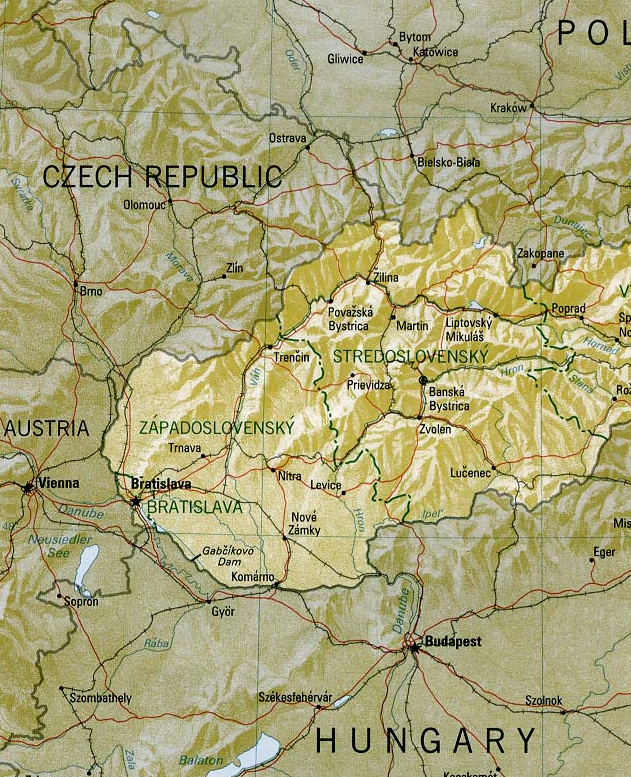
I come from Slovakia, my dad is from a small village in the northern part. It's actually the very last village in Slovakia, then there is the border, and then there is the Czech Republic. My mum comes from a very southern city where there is a very significant Hungarian and Roma minority. I was born there, but I spent my whole life in the northern part of Slovakia. My grandparents still live in the south, so each summer I would spend in the south with my grandparents. So technically I come from the northern part of Slovakia, but the village where I grew up and went to school is very distinctive, and I’ve never really identified with it. People in that village are very proud of being the citizens of the village, and I never had that.
Is there a cultural difference then, between these different regions?
Of course. People in the south or southeast… I would say in Slovakia, the further east you go, the nicer people are. I think that would also apply for my mum's side of our family, that they are more warm-hearted. So yeah, for sure.
And are you living in Slovakia now?
I don't really know, because for the last couple of years I have been studying in Brno, in the Czech Republic, and I spend more time there than in Slovakia, but my address is still in Slovakia, so I guess Slovakia is still my home.
And do you want to stay there?
Unfortunately not. I love the country, it's my home, but the political situation has escalated enough for me to consider not moving back.
If the political situation changed, would you want to stay in Slovakia?
It doesn't come just with political change, because the country is so devastated thanks to our previous governments that it will take years if not decades to get it back on the right track. So I think I would consider it, but we already had a change of government, and the government didn't even fulfill the whole term, it just fell down, it crumbled.
So where do you see yourself living if not Slovakia?
I think the Czech Republic.
You mentioned the southern areas of Slovakia which have a lot of Roma, a lot of Hungarians. Slovakia generally is seen as an ethnic community, but of course there are Rusyns, Roma, Hungarians, historically Germans as well, Ukrainians, Poles. It's very multi-ethnic for a state that is supposedly mono-ethnic. So how do you see the relationship between Slovaks as an ethnic group and the national minorities within Slovakia?
In the village in the northern part of Slovakia there were, until around 2018, no Romas. Nowadays there is one Roma family and they moved in in 2017 or 2018, something like that. So growing up in the northern part I had no interactions with people of minorities of any kind. On the other hand, in the southern part, it's completely normal to go to the shop and the vendor says ‘please’ in both Slovak and in Hungarian, and in my opinion that's beautiful. So over there I would say it's cohabiting without… I mean, I'm 23; I don’t know what was going on there in the 90s. But now, I would say there are no problems, they live together. The signs to say you're entering a certain village are both in Slovak and in Hungarian. But as I told you, I've never lived there permanently, I would just spend holidays there in summer or Christmas.
Do you think that attitude is common, that the situation with the Hungarian minority is good or sustainable?
I think it is sustainable. Now we don't have any significant Hungarian political party, which is weird based on the number of Hungarians living in Slovakia. There was one, they were in government in 2018 or 2019, but then the journalist [Ján Kuciak] was killed and the government fell, and since then they didn't even make it to the parliament. There are a lot of smaller Hungarian parties, and they can't really form a coalition to get into the parliament. Politicians don't say anything about the creation of some kind of political bloc that would represent Hungarian interests, so that tells us that there is no need for some political force to pursue those kinds of interests, in my opinion. They have a lot of linguistic rights. There are signs both in Slovak and in Hungarian in the city where I was born. They can attend Hungarian schools. There is even one Hungarian university in Slovakia. It's not very good, but it is there. There are some Hungarians who live in Slovakia and never learned Slovak because they didn't need to.
Is that something that most ethnic Slovaks are aware of?
I'm not sure. I grew up in a very mono-ethnic area, so I don't know. I'm happy I could spend some time in the southern part, which is completely different on these things.
Assuming you feel a connection to your country and your culture, is that a connection to Slovakia as a place, and all of the people in it, including the Hungarians? Or do you feel more connected to Slovaks, Slovak language, Slovak culture and not so much the other groups?
I’ve never thought about it this way, but I don't think it would make any difference. I would say I’m connected equally to both. Maybe because of the historical awareness I have. Because, for example, Bratislava has never been a completely Slovak city. It was a multilingual, multicultural, multi-ethnic city. Only for the last couple of decades it's been completely Slovak.
Speaking of history, how is the broader history of Slovakia and the Slovak people taught and thought of?
We were always taught about Slovaks, the Slovak nation. We actually never learnt ‘what is the Slovak nation?’, or ‘what is a nation, how did they emerge?’, but we were always taught that we were the oppressed ones in every state we find ourselves in. Excluding the Slovak state during the war, but we were oppressed under the Hungarians, and even in Czechoslovakia we always played second fiddle. So we were always the oppressed ones.
Even in Czechoslovakia? So the first republic isn’t thought of particularly fondly?
I would say that we definitely don't feel as warm towards it as Czechs. Maybe it's because of Masaryk, maybe it's because of Štefáník, who died very early. So there's nothing to connect those feelings to within the first republic. By the way, Masaryk's father was Slovak, but we don't really have this connection to him. Czechs call him daddy Masaryk, but we don’t really.
Do you think of him as a Czech figure then, rather than Czechoslovak?
I would say Czechoslovak only to be historically accurate, but emotionally… I'm studying at Masaryk University, so it's different. Now I also feel some kind of connection towards him, but before, when I was in grammar school or in primary school, no, not really.
Do you think there are other Slovak national historical figures that have been overlooked in favour of these predominantly Czech ones?
Štefan Osuský for example, he was a diplomat in the USA and he did a lot for the creation of the first Czechoslovak Republic, and I think I found out about him only in grammar school, which is so late.
How about Dubček? How is he remembered?
We actually never learnt about him much. Maybe in the generation of my parents. But in mine, not really. I don't even know much about his life.
Speaking of Dubček, how was the Prague Spring remembered, and the Soviet invasion? Would you say it's a different narrative to the one in the Czech Republic?
I would say no. I would say here we have a pretty good public consensus on this. I hope so. I feel that way, and I haven't heard any public reactions that would state otherwise, which can’t be said about November '89. But I think we will get into that.
Well, we can get into that now. Do you think there's a difference between the way that the Czechs and Slovaks see '89? And how do you see it?
Well, I wasn't alive then, but I feel really connected to this day, given the fact that our government cancelled the public holiday this year. And you would say that it's not a big deal, but the symbolism of this day… people know the 17th of November, but not many people know that there was a big student demonstration in Bratislava on the 16th of November. And we have a prime minister who says that the 17th of November was planned by the communists, and that the revolution didn't start from the grassroots. But for how people perceive it, I would say my generation, even though we didn't live during the time, we can value the act that happened then.
How about the split, then?
I remember asking my history teacher in primary school whether she thinks it was a good thing to split up, and she told me that it was better during Czechoslovakia, but I would say just because of the economics, that they were pulling us, because they were always bigger. But given the fact that it was a peaceful split, and there was no referendum, I think I read somewhere that if there was a referendum, we wouldn't have split up, because people didn't wish so. So there is no public debate about it. Just ‘it happened, here we are’.
You mentioned this narrative that you were always playing second fiddle to the Czechs, and that you were always oppressed throughout history, even in Czechoslovakia. Why is it then that people didn't want to split?
It's a very nice example of the way Slovaks think. Either it was good to be in the common state or it wasn’t, but Slovaks can say that it was bad and it was good in the same sentence and be totally okay with it. So I don't think we came to some kind of reconciliation with our history and how we perceive it, and that's why we might seem a little confused about it.
That brings me to another question specifically about history. Milan Kundera has posited the idea that the difference in Europe between the small nations and the big nations is that the small nations are at the mercy of history, powerless against the tide of history that determines their destiny for them. In this comparison, Slovakia would definitely be a small nation. Do you think that's an accurate way of describing it, or would you say you're in a position to be able to determine your own destiny?
Until 1989, I would say that we were at the mercy of history, because while we weren't part of the USSR, we were still their state. But then, when the communists fell and the USSR didn't exist anymore, and we were able to join the EU, join NATO, join the Council of Europe, I think there was a time where we could choose our own path. We did that, but we are also doing it now, and we did it in the latest elections, which were two years ago. And again, we chose our own path.
Slovakia has never really had its own state before in all of history, excluding the German puppet state. With that in mind, do you think that influences Slovakia in the sense that it's a nation-state in its infancy? Are there still areas where its direction is still not set in stone?
Sometimes we try to apologise for our actions or hide them in the fact that we are a very young nation, and a very young state, and our democracy is still young. But thirty years is not that little. It's enough, I think, for us to distinguish what's good and what's not for us.
Okay. And you mentioned before NATO, the Council of Europe, the European Union. Do you feel connected to Europe?
So much. I don't know if it's because of the fact that I studied European Studies. And I was born in 2002. We joined in 2004. So immediately I was able to experience all the good things that it brought us. Thanks to it, I was able to go to Erasmus. I was living in Spain for two or three summers. I'm studying in a different country. That's because of another international agreement, but it's still leaving my home country without any obstacles. So yes, yes, for sure.
Do most people feel connected to Europe in Slovakia?
I don't want to say it's 50-50. It's still 52 to 48. Yes, but I would say mainly the younger generation who can experience Erasmus and these things.
So do you think there's a generational divide between those who grew up with it and those who didn't?
I would say so. Yes, I grew up with it and I don't know anything else, right? I remember Slovak crowns. I remember when I was little, I was very sad that we won't be using Slovak crowns anymore. Now I'm so happy we are in the Eurozone. And I'm so mad at Czechs that they still aren't. But I don't think that some grandma in the very, very east of Slovakia is feeling the same towards the EU as I do. And I don't want to seem super Euro-optimistic with rose-coloured glasses on my eyes. I do see the problems and the troubles that are within the EU now. With its decisions and all the scandals. Yes, I can see it. And even during European Studies, my grandpa once said that they were brainwashing us. But that's not true. We were taught to criticise the EU as well.
Why don't the older generations also feel positively about the EU if they can see positive changes?
I don't think they are really able to see that. Maybe it does have something to do with them living in the communist era and remembering that everyone had a job, everyone had a place to live. But they were never taught about the bad things that communists did. We never really came to terms with our communist past. I would say that in general the former USSR never really came to some kind of reconciliation with their history, like the Germans did for example with their Nazi era. So I would say this might be one of the reasons.
Okay. Do you feel more European or Slovak?
Oh, that's a good one. Right now I would say it's 50-50. Maybe that's because I'm here on my Erasmus in Strasbourg, which is a very important city for EU history. So I would say it's 50-50 now.
So it's been shifting to more European?
Yeah, yeah, for sure.
When you do go back home, do you feel suddenly more connected to that community and to your home, or do you feel that you've changed in the time that you've been away?
That's a question for my parents, whether I've changed or not. Usually when I get home, as I said, my parents live in a small village. So for the first couple of days I'm like ‘oh my God, it's so beautiful in here’. The nature, and my parents, and everything is lovely. But then I get bored. I get bored and I want to get back to Brno, which is a big city. But I still go to Slovak theatres or Slovak festivals or concerts. That's also when I feel Slovak.
Do you think there's something about Slovak culture that's particularly special to you? Something that separates it from your neighbours, neighbouring nations?
Most of our neighbours are Slavic, as we are. There must be something for sure. But I don't really like these cultural divisions. Like ‘we are like this and you are like that’. For me, borders are so blunt. In reality, they are not that strict, they are not that visible. For example, when we go hiking with my parents, we actually cross the border. You can see the border stone, and we would make fun of it like, ‘now I'm in Czech Republic, now I'm in Slovakia’. So the borders for me are just something formal.
So you also feel quite connected to the other Slavic groups in Central Europe then?
I think it's natural. It's not something I would do on purpose. It's natural.
Okay, makes sense. There are, though, interesting differences between Czech culture and Slovak culture. Slovakia today is still very religious, and then the Czech Republic is one of the least religious countries in the world. Why do you think that division has emerged?
I have no idea, but during the census, if you state that you are a Catholic, it doesn't mean that you live up to those Catholic standards or that you live a Catholic way of life. During the last census I also stated that I'm a Roman Catholic, and I have never been to church. The next census will be in 2030, and I think I will just put that I'm not religious, I'm atheist.
Do you think that Slovak culture then is represented accurately abroad or is it misunderstood?
How is it represented abroad? You tell me.
I would say it's seen as quite backwards in Western Europe. It's not necessarily looked down on, but it's poorly understood, definitely. And lumped in with Eastern Europe. It just comes under the broad category of 'Eastern Europe’. But do you think your close neighbours would see it differently?
When we think about ourselves, we also think about ourselves like we are still in the 19th century. Like, we are those people taking care of sheep and living in huts or whatever. We as Slovaks don't have this will to to be a modern nation, a modern country. We're going backwards. It's difficult with the government. You know, it's still not that bad as Hungary, but we are getting there. We're getting there, and we are not a reliable partner anymore. I don’t know how Polish people perceive us. With Hungarians, it might be specific because of the minority which lives in Slovakia, but with Czechs, there are still so many stupid jokes about Slovaks being stupid or whatever. So I think I would agree with you.
What about the Eastern European label? Because in Western Europe, Slovakia is Eastern Europe without question.
No, no, no, no, no. Central, Central Europe. Central Europe. I'm sure there are lots of aspects which a sociologist could tell you about, but I remember learning at school that in Slovakia, we have the most eastern cathedral, which is the one in Košice. And you don't have these kinds of cathedrals in Eastern Europe. So that's kind of a dividing line.
Why do you think Slovaks are so keen to draw that line?
Maybe it's the last straw we can hold onto to distinguish us from Ukraine and Moldova, Romania, Bulgaria – who are better in so many aspects of their life now than we are, but yeah.
What about relations with Russia? Are Russians seen as culturally very close, or is there more distance?
It's very polarised. It's either Russia is our best friend, or Russia is our biggest enemy. There's nothing in between, I would say. I think it all comes back to the communist era, where some people still didn't understand that it wasn't a good era. We weren't prospering as a country. And also with the war and with the disinformation that we are now experiencing, and the hybrid war, which is crazy.
Politics and culture aside, what's going on in your life, in terms of where you see yourself headed in the long term? Are you happy with where you are now?
Well, I'm going to do an internship at the European Commission next year. Then I need to somehow finish my studies. And honestly, I have no idea where I see myself. I don't think it's Brussels necessarily. I hope I will work within the EU institutions either in the Czech Republic or Slovakia. I really don't know. I have my life planned until graduation, and then there is nothing. I have no idea what I'm going to do.
Last question then. Is there one artist from your culture that particularly resonates with you? It could be a writer, photographer, painter, anyone.
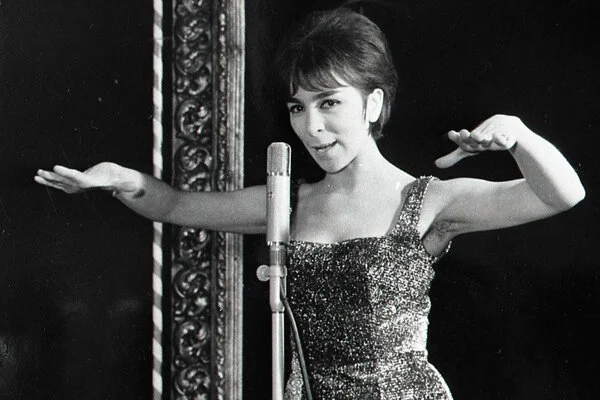
There is one singer who was born in Bratislava, but she spent her life in the Czech Republic. Hana Hegerová. She died in Prague. Everyone knows her songs. One of her songs is like... I don't want to say ‘my song’, but I sang it a lot in the art school which I attended. And I also sang it at some concerts. So I have this personal connection to her.