Rania
Can you first introduce where you’re from, where you grew up, all of that?
Yeah, of course. I guess I have two sides of mine. I have my father's side, he's completely Moroccan. He moved to the Netherlands in his twenties, where he met my mum. On my mum's side, she was born in the Netherlands. She's Dutch, but all of her family, her parents and beyond, are also from Morocco. So I've got my mum who's Dutch, but ethnically Moroccan, and then my father's completely Moroccan. I was born in the Netherlands as well, and then I moved away at about ten or eleven years old to England, together with my parents and my brother – who was also born in the Netherlands – because my father found work. And yeah, ever since then – I'm twenty-three now – I've been in England really.
Do you have citizenship here?
No. [laughs] I moved here pre-Brexit. I'm still on a Dutch passport, and I've got settled status. No English passport yet. My brother has an English passport. He's the only one in our family who does.
Do you feel more connected to the Dutch side or the English side?
I think the English side. I mean, it makes sense. I've been here longer, but I've also spent most of my proper growth years here. I know people often talk about childhood as being the years where you're forming, and that's true. But I also think that adolescence and your teenage years are when you start making your decisions about what you like, what you think, and what your opinions on the world are. And those have been shaped in England. Being at university, learning how to think about the world, being in secondary and sixth form. Those have all been here. And because of that, I feel like a lot of my thought process has been shaped in quite an English way.
It is interesting though, because although I came here about ten or eleven, I still have a remnant of an accent. So because of that, I feel like there is always a part of me that won't be completely British. Not in a sense where I don't connect to the culture, but I think the first talking point with people is often ‘where are you from?’, even if I connect better with England. So there is always that little distance. That few percent that means that I'm distanced from the culture. Alongside, of course, the way I look. If you look at me, I'm not British, I'm ethnically Moroccan. So I don't think I'm 100% anything. If I had to choose, I would say England is most familiar.
So if you were introducing yourself, would you say you're English or Dutch?
See, that's so interesting because it happens a lot, right? Especially since I don't have a British accent. I've got some remnants of a weird Frankenstein accent. My go-to response is ‘what do you mean?’, ‘in what way?’, and people always look at me quite puzzled. I had to do that last week when meeting somebody. She's an international student from Egypt, and I was thinking ‘oh gosh, how do I approach this?’ Because, you know, we're neighbours, Morocco and Egypt, but then do I really connect with that? So I just hit her with a ‘what do you mean?’. They often say ‘tell me everything’. So I have to give them the whole story, because I feel like if I tell somebody I'm British in England, they're going to raise an eyebrow; ‘no, you're not’, which they're right about. Dutch is sometimes what I go for if the setting is right. For example, if I'm at a conference and lots of the people there are from Europe or from Germany, I often lean towards Dutch.
But I feel like most people who ask ‘where are you from?’ are really asking like, ‘why do you look the way you do?’. So I feel like I have to add in the fact that I'm ethnically Moroccan, even though that opens doors such as ‘do you speak Arabic?’ and then I have to let them down. I remember once in my first week at work there was this employee from Egypt who saw my name and was like ‘oh, where are you from?’ and I had to do the whole spiel. And then he asked ‘do you speak Arabic?’ And you can just see them let down when I have to tell them I don't. Or a taxi driver asking me why I look that way or why my name is Rania.
Long story short, to be safe, I tell people the whole story because I often feel like they will dig for something. If I say that I'm Moroccan, they will ask if I speak Arabic. And if I'm not able to say that I do, I'll have to explain that I lived in the Netherlands. If I say I'm Dutch, people will question why I look the way I do, why my name is Rania, and why I'm five-foot-two instead of a huge towering giant. And then if I say I'm English, while I'm in England, people often can tell I'm not. If I'm on a holiday abroad, I will often just stick with England or something like that.
So you're being asked that wherever you go.
Yeah, yeah. I do notice that I'm asked that a lot, which makes sense because I've got a little bit of an accent. I don't look white British or anything like that. So I don't think it's always people trying to separate me. I think a lot of people are just curious. They see someone who looks different or has a different name. A lot of these people, like they might be from Egypt, are very curious. Maybe they think you're from where they're from, or maybe they know somebody from a culture they think you're from. I think it's inevitable, even though it's sometimes a hard question to answer.
And in the Netherlands, can people tell that you haven't spent as much time there? Do you have any sort of an accent when you speak Dutch, for example? Because I imagine the Netherlands now is a pretty multicultural country, so I'm a little surprised that you would be asked so often ‘where are you from?’ while you’re there if you're speaking Dutch at a native level.
Yeah, you're totally right. The Netherlands is hugely multicultural. A lot of my family is from Amsterdam specifically. Hugely multicultural. Whether my Dutch has slipped a little bit? Yes, especially in my written Dutch. But obviously people don't notice that when you're spending time abroad. I have noticed- I was so sad. I got a phone call from my aunt the other year and she was talking to me. I often hear ‘oh, wow, your Dutch is really good still’. But she said something like ‘oh, it sounds like you've got an English accent when speaking Dutch’, and I was thinking ‘oh, no!’ [laughs] ‘Oh, gosh. An accent on speaking English AND on speaking Dutch?’ So there’s definitely that indicator. And of course, I don't have a Dutch face either. People are curious to know if not whether I'm from there, whether my parents are from there either. I think that's to be expected, to be honest.
And does that bother you then, the fact that you're always having to answer this and always giving caveats?
Yes and no. 99.999% percent of the time people who ask this aren't trying to be discriminatory. They're saying this out of genuine curiosity, and they seem super excited when they ask that. So I can never be mad at that. But it is difficult because I'm having to explain these cultures and it feels like there’s a tag against my name. And although I love all of the places I am from, it feels like I can never distance myself from them, often this is the first thing people want to know about me.
And I guess I feel it's a bit of a shame as well that although I have these labels to my name, I don't have that strong of a resonance with my culture. So I have to tell people I am from Morocco because there's no way of distancing myself from the fact that I'm Moroccan. I've got a Moroccan name after all, but I can't speak the language, I haven't been there in so many years, and I feel like I'm mis-selling myself by adding that to my name. But I have to add it to my name because it is part of me. It's a weird internal mixed bag of feelings.
Do you wish you had more of a connection to Morocco then, for example?
Yeah, it is really difficult having the name, having the face, having the family lineage and not even being able to speak the language. I'd be lying if I said I don't feel a sense of shame when I have to tell people that I'm not as connected as I should be.
For example, I think if you take minorities in the Netherlands, like the Moroccan minority, they often have quite a strong feeling towards their culture, a sense of pride, because they're a minority and it's the little piece of home that they have left that they brought into the country. I admire that to a certain degree. I often think we talk a lot about the bad parts of nationalism – there are many, many, many parts that are bad – but on the patriotic side, there's something so nice about having a place that's home or feels homely, to have something that you can connect with. A culture. Meeting somebody in public who’s completely different to you but you share and you know the same love for the same food, or you've been to the same places, or you understand that depth through language.
I think it's hard to replicate, and unfortunately, as much as I love to be more connected with my culture now, I fear that the way that I interact with it is always going to feel more like a tourist to my own culture. The way I have to go out of my way to learn the language, or visit these super touristy spots in Morocco that any native would never go to. It sometimes feels like I'm putting on a costume to my own culture. I sometimes envy people who can say ‘oh, yeah, me? I'm Moroccan. I know everything about Morocco. I grew up there. It's my home’. I remember when I told that Egyptian co-worker that I didn't speak the language, he said ‘oh, it's fine, you don't need to know it’ and I said ‘I feel like there's a little bit that you will never be able to connect with if you don't speak the language’. I think if you speak the language, you get so much closer than if you don't. I remember him agreeing with that, and I think it's true. There's always going to be that distance unless I cross it, which is going to take quite a while because it's not an easy language.
Are you trying to learn it?
At the moment, I'm not. No. I've been really focussed on all sorts of things. I mean, I'm making excuses here, to be honest with you. Part of me is focussing on trying to secure what is immediate. My immediate career in the UK, in England, my immediate degree here and everything to shape my new world here. It's even harder when Morocco feels so far away, when I don't have a close, tight-knit family that I'm connected with from Morocco. I don't have a lot of Moroccan friends or anything like that. It feels like this other world that’s just out of reach. It's something I have to try harder for if it's something I want, which I haven't yet. That and it being quite a challenging language has stopped me so far as to learning it. But I really hope to be able to make it more of a priority at some point.
From the sounds of it though you have been there before.
I have been there when I was super young. We used to go every few years, and then the last time was eight years ago or something like that. So it's been a long, long while.
Would you like to go back? Do you still have any family there?
I do have family there. We’ve never been super close, but I do have family there. I would always love to go back, but it's been really difficult because of the years and years of separation. Obviously, growing up in the Netherlands is hugely different, and then the UK is hugely different. A lot of my values, my culture, and my opinions have been shaped to be quite different to what's often the dominant culture in Morocco or what my family aligns with. I think that's the difficulty with my relationship with Morocco, because it's always going to be attached to my connection with my Moroccan family, which has been so-so. We're very different in the way that we think. We have very different beliefs, very different opinions. I think it's always going to be a weird relationship with the country because of that.
By the sounds of it, integrating into the UK has been a lot easier. I’m assuming the culture feels more natural to you?
The culture feels super natural, yeah. It was really difficult with language at first when I came to the country at ten or eleven, I remember struggling a lot to fit in. You know how kids can be. Not very nice when you don't fit in. But as the years have gone by, it's been so much easier to integrate. Even with the Netherlands, I remember visiting three years ago, and there were parts that felt like home – I was able to speak the language that I haven't spoken in a public setting in such a long time – but there are lots of things that have happened and moved on since I've been gone. So many cultural references that I just don't know. Actors I don't know, singers I don’t know.
I've spent so many years here being surrounded by that: watching British television, going to school in England, listening to the music on BBC Radio. Especially in my years as a teenager or a preteen. It's been much easier, especially speaking in 2026, to feel at home here.
Would you say you can feel at home in both places or instead that neither place is truly home?
I think none of them will be 100% home. I think England is like 80, 90% there. As I said, there's always going to be a distance because of the colour of my skin, my name, my accent, things like that. It's not going to make it super easy to always blend into the crowd. Once again, people say this out of curiosity, but they always end up – not from any fault of their own – separating me from the group. ‘Oh, there's that one girl, where is she from?’ and then it makes you remember, ‘oh yeah, I'm not from here’. So that's always going to be a challenge. But I would say England would be 80, 90% home. The Netherlands would be 60%, and Morocco is probably the biggest challenge I've had relating to culture and the country.
Would you like to have one place that is 100% home or are you comfortable with the idea that you're just from multiple places?
I think it's like a double edged sword in a certain sense. On one hand, I really admire people who have a home. The way I view home is kind of a fantasy concept because even in the Netherlands I was always a little bit of an outsider, especially since in my formative years I was in really small towns that weren't very diverse. So I've always felt as an outsider. My opinion about home is tainted by that; I never really felt it. When I see people who have their own culture they relate to, it feels almost like having your own family. Obviously you can appreciate everything else, but you've got your home base, the thing that feels like that sense of warmth, that thing that transcends wherever you are. I envy that sometimes. For example, when I'm talking to people and they're saying they're going back home to visit their family in said country, whichever they may be, or when I'm at a party and two people are from the same dominant culture and they just really hit it off, I sometimes envy that and admire that.
But I think there is also a good part of it. I think… Obviously my experience in Morocco has been limited, but at least with the Netherlands and England, I think it gave me a fresh perspective, and because I don't feel super stationed in any country, I feel like I've developed quite an open mindset. It made me much more open to the possibilities of different ways of life, different cultures, the ability to just move, and different ideas. Because that's often what cultures are: they're different ideas, different ways of living. I guess I've become more open as a result. That's the good side.
Do you see yourself making use of that then and moving around further?
I feel like the way I think about England has been quite practical. My mum, on the other hand, often talks about going back to the Netherlands, and for her she has that feeling of home. Each time I ask her about what it is that’s drawing her back to the Netherlands, it's always a feeling. It's not necessarily the healthcare, or whatever metric you want to use. It's ‘I want to go back home’. For me, it's always been more superficial, if that's the right word. I'm here because I've got friends here, but I'm here because it's really good for my career as well. It's one of the best places to study and practise law in the world. It's a great location, England, when it comes to being able to move into Europe. It's in the middle of almost everything. But if these factors change, as much as I'd love to stay here since I've built my life here, I'd be open to leaving. If I find out that Germany or wherever becomes the new legal powerhouse, it won't be long until I'll be out of here.
But one thing that is important to note is the UK and the Netherlands were both within the EU. So I feel like because I've spent my whole life within that context, my heart does come back to Europe. Even if it's not England or not the Netherlands, I think it'd be challenging – not impossible, but challenging – to leave the continent altogether. If there's a super-duper convincing reason for me to go to the Americas or Asia, I won't ever say no. But I think I have a little bias to this little continent.
Do you have some sense of European identity?
I think so. It's interesting, because I talked a lot in this conversation about the feeling of home. Although I didn't feel that with the Netherlands or England, I do feel that sometimes with Europe. Like, for example, my boyfriend is from Poland. When I visit Poland and I see the same ice cream brand I saw in the Netherlands, I feel a rush, or nostalgia. Or when I go to Germany and I see a similar cartoon character that was really popular when I was growing up in the Netherlands, it just brings joy to me, which is interesting. I feel like there are certain things that connect the continent. Certain songs that play on the radio that are super popular in Europe, where you're like ‘oh wow, we do have things in common.’ I think my feeling of European identity is coming from that.
Okay. And have you been around much of Europe then? You mentioned Germany and Poland.
Yeah, not a lot. I want to do more. I've briefly been to Belgium as a child. I've been to Spain when I was in secondary school. I was part of a youth choir and performed there. Germany, in the winter. Poland – I've been going almost every year now. That's been a huge hub. My boyfriend has much more of a tight-knit connection to his culture and his family. Much more than mine. So we always end up there, whether it be his hometown, Łódź, or anywhere else. I've been on trips to France. Growing up, my family didn't travel too much, to be honest. I'm always trying to catch up on it now because it's not something I did a lot as a child, which is funny, because we moved countries, but we didn't really go on many holidays across Europe or beyond. Yeah, just little trips here and there that I've tried to make time for.
So you've talked about being caught between Dutch and British cultures. What would you say are the similarities and differences between those?
It's really hard to say because I've been away from the Netherlands so much, so I'm always wary of being the Dutch culture expert. Sometimes people ask me about how things are in the Netherlands and I always have to preface by saying ‘I haven't been there in a while’. But if you're talking about my transition, I think culturally they're very similar. They're not far away, so that makes sense. A lot of the media you grow up watching is identical. In some respects, the Netherlands has much more of an honest, frank culture. People don't beat around the bush. If they have an opinion or they think you're doing something wrong or they don't like to do something, they will be a bit more honest about it than you’ll often see in England.
But funnily enough, even though this is true, I didn't have the hardest time with this because – maybe it’s because I spent more of my socialising years in the UK – I felt like I'm much more aligned to the British way of talking than the very honest, frank Dutch way. There are definitely small details like that, but it's not been super difficult for me to navigate. I'm sure if I moved here now, at twenty-three, from the Netherlands to England, I would notice that more. When I meet people from the Netherlands who moved here a bit older, or international students, I think they notice these cultural things way more than I did when I was ten years old.
Yeah, I definitely think that you seem more British than Dutch in the way that you speak compared to the blunt attitude that most Dutch people have.
Yeah it’s funny, I was at Brighton beach not that long ago with my friend from Canada, and we saw these firemen by the beach. I said to her, ‘why don't you go up to them and ask what's going on?’ just out of curiosity. And I thought to myself, ‘why don't I just ask?’. So I went up to the firemen, and they answered. My Canadian friend, she's like, ‘oh, I'm so proud of you, well done!’ and she turns to the fireman, ‘I was just saying to her, she's so British, you know? She's always too shy to speak up’. I notice that she often says, ‘she's so British, she's so British’. I don't know how I feel about that. I think it's true that I'm culturally British, but it felt weird to be called British because of how many times I've been asked where I'm from in this country. So culturally I am quite assimilated, I think.
You mentioned you found it much easier to integrate since you moved when you were a lot younger. But your father would have left Morocco for the Netherlands when he was about your age now, right? Not only that, but he left to cross a much broader cultural gap and then again left the Netherlands to come here. So how do you think your experience has compared to his?
Yeah, it's hard to say. I will preface this by saying he passed away six years ago, so I don't know how up to date my knowledge is. I didn't really notice how much of a big change that was for him until I started my uni journey. I used to think I’ll have such difficulty moving to a different city – from Bracknell to Brighton – and I couldn't imagine moving to a country with a completely different culture and language. The Netherlands and Morocco are culturally really different, even though it does help that there is a Moroccan community in the Netherlands.
I don't know too much about his personal experience moving to the Netherlands. I know that he struggled with the language, as did I when I moved to England. On the other hand, England is even more complicated because my father moved first when he was in his teens to start a degree in Glasgow, but it didn't work out. He had to leave to Morocco again for a good few years, and then he ended up in the Netherlands to properly do his degree in his twenties. He stayed there until he moved to England. So I guess to him it wasn't super different as he's been to Britain before and he spoke English at that point. I imagine that the move from Morocco to the Netherlands was definitely the harder one.
Speaking of the Moroccan community in the Netherlands, it certainly feels here like the topic of non-European migration has got very toxic within the last few years. From what I understand, the Dutch Moroccan community specifically are one of the main targets of this rhetoric. Do you know what your family thinks about that?
Growing up in the Netherlands, I think you're quite aware if you come from a Moroccan lineage that you are the minority, and there are people that have opinions about that. Since then, after moving from my small town in the Netherlands to England, I've had distance from the discourse. So I'm not a Dutch expert, it's quite limited to my childhood memories and that specific town. I do hear that things are, as in many places in Europe, getting more tense about immigration and assimilation and all those things.
I'm a Dutch national, but I'm ethnically Moroccan, but I reside in the UK. For a lot of people, their nationality and their ethnicity are the same, but in my case it's not. My family are ethnically Moroccan, but on my mum’s side, all of them have Dutch citizenship, and not all of them have a Moroccan passport. It's really interesting to see their opinions about politics in the Netherlands, because you would assume that they would support politicians that are a little bit more left-leaning as opposed to those who are anti-immigration. But since they have the Dutch passport, they align themselves so much with their citizenship.
I remember my mum being like ‘I really hope we get a more right-leaning politician in the Netherlands. because I'm so tired of these immigrants taking advantage of us. I think Dutch citizens should be prioritised and I think that's the way it should be.’ I said ‘you're an immigrant…’, she's like, ‘no, I have a Dutch passport, and all of these asylum seekers are taking everything from us’. I remember thinking that this is so strange, all of them are ethnically Moroccan. But you can make a case that she was born there, she was raised there, she was completely assimilated. She's relatively white passing as well. It makes sense that she has that tie to her Dutch side, but it is really still interesting to see minority groups being quite against immigration, even though they wouldn't be able to be there without it, you know?
From what you’ve said, it almost sounds as if you're more connected to that Moroccan side than your mother is. Would you say that’s the case?
I think it goes back to the issue where as a third culture child, your depiction of your country – one that you have never lived in or weren't born in – is always going to be tainted by your opinion of your family. Those are the ones you always visit, those are the ones that give you the guide into what Moroccan culture is. That's usually all you get, unless you make lots of friends there. I think my mum has that issue, where it's mainly my father's side of the family residing in Morocco. She's had a difficult relationship with them, which is always going to taint Morocco for her, and I don't see any drive to want to visit the country at all.
But on the other hand, when she's in the UK, I always see her finding Moroccan, Middle Eastern, or Arab communities as opposed to Dutch communities. Obviously, you can say that there are fewer Dutch people, especially in Bracknell. But it seems she does feel a certain pride for Morocco, even though she wasn't born or raised there either. When she meets someone from Africa generally, or from Morocco or a neighbour like Egypt, her eyes light up, and she's so excited to make friends and connect with them over that.
So although there are aspects about Morocco that she thinks so fondly about, I think the idea of actually living there or visiting has become really difficult for her due to family. I think my mum's opinions – she identifies as Muslim as her parents did, and she's quite conservative in belief – means that often she has opinions that are quite similar to those who have immigrated from Morocco to the UK, for example.
I think I'm different, because the fact that I'm not really religious makes it even harder for me to connect with Moroccan culture, even if it's not in Morocco. I'm pretty left-leaning; I've always had those political beliefs, and even more as I grew up and went to university, which makes it a little bit harder. So on the whole, I would say we both have quite a difficult relationship with Morocco, but I think my mum somehow remains way more connected with it than I do.
Speaking of university, you mentioned before that you were a little intimidated just going from Bracknell to Brighton. How did you find that transition? Do you like Brighton?
That's so interesting; Bracknell has felt like home because it is home. I spent almost all of my years in England there. Brighton has only been four years, but it feels like home. It was really difficult moving here at first because it was different culturally, in the sense that it's a much bigger city. There's so much to do, it was intimidating. It was this huge student town with lots of young people, and I always struggled socialising with people growing up. My mum was quite conservative and she made it quite difficult to do stuff like sleepovers or go to parties – God forbid. [laughs] God forbid.
It was exciting, but scary, to go to a place where I'm deciding these things for myself. Going from having to push back on my mum a lot just to do normal things like going to a friend's house, to being able to decide what I'm doing, when, and where. I think the cultures also reflect that. Brighton is such an open city. People are so diverse in thought, and it is quite left-leaning, which aligns closer to my values. So it was a huge change, but Brighton really became home. I met lots of people that align with the way I see the world.
I remember I spent two months in South Korea a few years ago for a summer school. I had so much fun, it was a great time and really a highlight in my life so far, but when I got the train into Brighton station, I was like ‘finally, I'm home’. And I thought, why am I saying that? It was only after one or two years of being in Brighton. I felt like there was huge weight to being able to think that I fit in. Maybe that's also attributed to Brighton being super quirky, so it's pretty hard not to fit in. I think you can be quite a quirky, strange person and still somehow not be the weirdest person in the room. So I guess all of these things have nuance. Yeah, it's feeling much more like home.
Do you think you'll stay in Brighton?
Yeah, for the short term, I'm trying. In an ideal world where I didn't have to think of factors like my career and future development, I think the chances would be high. Obviously, I have to think about those things, so I will always go for the city or the country that's able to provide the most. I also think there is a lot of value in being able to leave a place, so even in a case where Brighton was amazing for my career, I would want to leave at least for a couple of years. Not just the city, maybe even the country. Life is short, and it's really important that you get to experience different ways of life and as much of what life is, which isn't just Brighton.
Where would you go for a few years?
That's tricky. I always have conversations about this to friends, or to my boyfriend. It's really difficult to say. I've been very dictated by my career, and I'm really interested in tech law, so places like Germany are quite attractive for me, and Germany gets that bonus of being a little bit close to home. It's not super different from the Netherlands or England, it's kind of a blend in that sense. But if I didn't have to think about that, it’d be much trickier. I'd be open to anywhere if it's only a few years. I'm happy to just see where life takes me. That's how I got to England, right? My father made a career choice, I didn't, and it ended up okay. I'm happy to see where things take me. But as I said earlier, there's this home feeling of Europe. So if you're talking about settling down, I don't think I would leave Europe.
So you don't know where in Europe you would settle down, but you do think it would be Europe.
Yeah, maybe settling somewhere like Germany, because it feels so familiar. If I end up in England, I wouldn’t mind. If I end up in the Netherlands, I wouldn’t mind. I think it's important, especially when you're younger, to be open, because you never know what the perfect place is for you or whether it's somewhere you never thought to look.
Okay. Last question then. Can you think of one artist from your culture – and I'm leaving that deliberately vague – that you particularly like, and that represents some of your culture as well?
I find that really interesting. I'm not super knowledgeable in the arts, which I would love to be more. I find people who are really aware and engage with that a lot really cool, even if it's film or music. But I've never been like that. I think, unfortunately, a lot of my years in the Netherlands and England were super influenced by the dominant American culture, which made it hard for me to connect with Dutch or English artists. If I think about my childhood, I think a lot about American TV shows on Nickelodeon, or American pop hits on the radio.
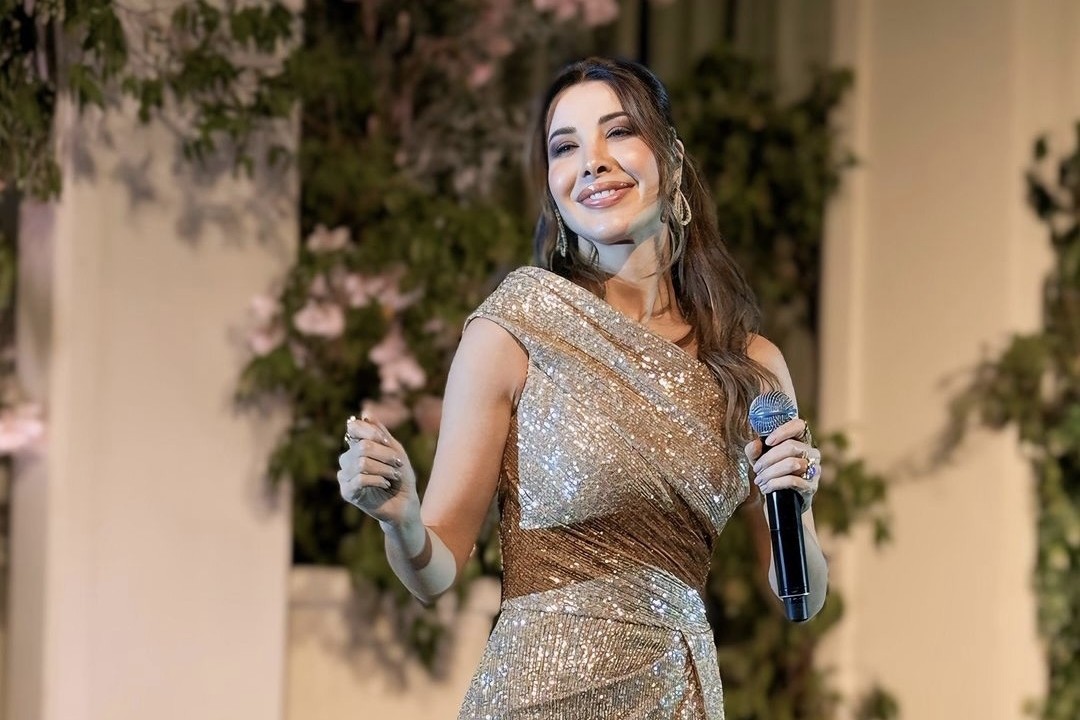
Ironically, even though I don't feel part of my Moroccan culture anymore, part of me is thinking back to when I was a young child, like five, six, seven years old. I remember my family always putting Nancy Ajram on. She’s really popular in Morocco. She's a Lebanese singer, actually. It's funny, because she’s not even Moroccan, and I'm not even that attached to Moroccan culture, but it represents such an innocent memory of Moroccan culture. Away from my fears about not fitting in, or my lack of religious beliefs, or my opinions about my family. Hearing that on the radio, going back to Morocco, or even just in the living room in my house in the Netherlands… Even if I didn't always know what the lyrics meant, the joy of the sound of the songs, and the dancing of my family in the kitchen is a core memory of mine. It goes back to how it's not always about rationalising a culture, but the feeling aspect as well.