Siranush
In your own words, can you tell me a bit about who you are, your background, where your family is from, and where you grew up?
I grew up in Jerusalem. My family are fourth generation Jerusalemite Armenians. My father is American, but he's pretty aware of the surrounding culture, pretty integrated. I'm studying in Europe, so I haven't been living there for a few years, but I visit every so often, whenever it's possible.
So your family are from Armenia?
My family is Armenian, but they're from Jerusalem. My family was from the Ottoman Empire, and they were from Sepastiya, Marash, Gesariya, and my grandfather was born in Istanbul. They left their home and escaped to Jerusalem during the Armenian genocide.
Okay. Was there an Armenian community in Jerusalem before the genocide?
There was. There have been Armenians there ever since 301 CE, when Armenia converted to Christianity, because of King Drtad. Back then, if the king does something, then everyone else follows. So Armenians have been in the Holy Land ever since 301, but prior to that, there was an Armenian empire that stretched all the way to northern Israel, to Haifa. A few years back, they found a few ancient Armenian coins in the Holy Land, and my sister actually helped to restore some of them. So even prior to 301, there were Armenians in that area, but it’s been consistent for 1,700 years.
So after the genocide during World War I, did that community grow, or did it mostly stay the same size?
It did grow. There's a term we use in Jerusalem to distinguish between those who came before and after the genocide. The term that's used for those who were there before the genocide is ‘kaghakatsi’. ‘kaghak’ means city, and ‘atsi’ means from, so ‘from the city’.
I’m not sure of how many Armenians there were in Jerusalem prior to the genocide, but afterwards, there were 10,000 in Jerusalem alone. Most of them were in the Armenian quarter and the Armenian convent, because that acted as a safe haven. Then, after the genocide, the community grew so large that they decided to build a private Armenian school in the Armenian convent in 1929, because there were a lot of orphans that came from the genocide that the Armenian Patriarchate took care of.
Do you think there's any cultural difference between the two groups - the Armenians who were there before the genocide and those who arrived afterwards?
Perhaps before, but now there aren’t very many kaghakatsis. I had one professor that was kaghakatsi and he was wonderful. But even his family was mixed, so culturally it didn't really make that much of a difference.
Perhaps in the beginning, I would assume that not every person who escaped the genocide knew perhaps Arabic, and I’m assuming Arabic was more of a prominent, widely spoken language amongst communities in Jerusalem at the time. So perhaps there were differences in that all these people came from various other places, and they wouldn’t have known how things go on here. Perhaps there were some language issues, because Western Armenians speak the Constantinople dialect. I only speak Western Armenian because my family's dialects have been lost. So perhaps even the dialects would have been a challenge; Armenian is a language with a lot of different dialects, and some of them struggle to understand each other well.
But right now, there really isn’t much of a difference, and there aren’t very many kaghakatsis left.
Okay, so are all the Jerusalemite Armenians Western Armenian then?
No, a lot of the priests are from Eastern Armenia – that being current day Armenia, the state, as well as many Russian Armenians, ethnic Armenians from Russia. Certainly the majority of the population is Western, but there are also Eastern Armenians.
Could you elaborate on the difference between Western and Eastern Armenia?
It's a modern distinction, which developed in the last century. Of course that distinction existed before, but over the last century it’s become more clearly defined. It's a difference in dialect, a difference in culture, a difference in attitudes. Western Armenians are categorised more as Middle Eastern, and they usually, but not exclusively, speak the Istanbul dialect. There are other Western Armenian dialects that survived the genocide, but those are a little less common.
Although, interestingly, there are a lot of efforts to revive Western Armenian dialects through music, especially nowadays. There's one man whose family was from Dikranagerd or Diyarbakir, and he sings specifically in the Dikranagerd accent. It’s a very fun dialect, they pronounce words in a much cuter way in my opinion, and it’s nice to hear different dialects.
But what really separates Western and Eastern Armenian are the spheres of influence. Western Armenia was under the Ottoman Empire for many hundreds of years, 500–600 years. Eastern Armenia was part of the Russian Empire. They briefly gained independence, but then came under the USSR. But even so, Armenians from Persia are also categorised as Eastern Armenian, like those in Russia. So it's more so an East versus West thing, separating those who were safeguarded by their communities or who had their own state from others that were under the Ottoman Empire, who had fled before the genocide and then were ultimately dispersed because of the genocide.
Culturally, through your family, you have a mix of Armenian and American, and then you grew up in Jerusalem. Can you clarify how those three different cultural elements coexist and if you feel any contradictions between them? Which do you feel most prominently?
Well, I feel more connected to my Armenian side. As I said, my father is very aware of the culture, and he's integrated very well. Of course there are clashes, but none of too much significance, because he did choose to stay there. He had my maternal grandfather, who spoke amazing English, and who explained a lot of things to him and taught him many things. And he moved in with my family – when Armenians get married, they traditionally don't move out of the house, they move in with each other. It's common to have intergenerational homes in Armenian culture. So my father definitely learnt a lot and he did things the way that my grandfather wanted things to be done.
There are clashes, but none of significance. I would always consider myself first as Armenian, and then I would clarify Jerusalemite Armenian. While there aren’t many many differences between, for example, a Lebanese Armenian and a Jerusalemite Armenian in terms of how we speak, our phrases, our culture, and our outlook, there is a significance to being from the Holy Land and having all of those things accessible to you. For example, church being a presence every day, having your education through the church, and Jerusalem as a whole. We have our own patriarchate in Jerusalem; there's one in Echmiyadzin in Lebanon and then one in Jerusalem. That in itself is a very significant part of Western Armenian culture – the Jerusalemite patriarchate.
You seem to be mentioning a lot about religion when you talk about being Armenian, but traditionally, from an outsider’s perspective, Armenian identity is seen as an ethnic one, which is distinct from religion. Do you find this to be true? What is the relationship between being ethnically Armenian and being part of an Armenian religious community?
It isn’t an ethno-religion, but it's a bit more complicated than that. To be part of the Armenian church, you have to either be married into it, through marrying an Armenian and having access to the church that way, or you have to be born in it. It is possible to convert to being an Armenian Orthodox, but it's definitely very rare, not common at all. That's because the Armenian identity holds so much onto the Armenian church, as that's often the only thing that's separated us from our neighbours, and been the only thing to really provide us with protection; although it's also been something that's made us a target.
Many people would refer to the genocide happening because we were non-Muslims, along with the Greeks and Assyrians. They’re of a different sect, but we're pretty similar. You know, Assyrians, Chaldeans, Armenians, all of these Oriental Orthodox churches, the reason they came about was to represent their communities religiously. So although I'm not Assyrian, I could attend their churches and their services and understand everything. It’s held in a different language, but everything else is the same.
So it's not an ethno-religion, like the Druze or the Yazidis are. To some extent, you could say Jews as well. You can be Armenian and be of a different religion, it's just that it's less common. There are Armenian Muslims in Turkey. Some converted prior to the genocide, sometimes they were forced to, and they still live in a certain part of Turkey right now. After the genocide, there were Armenians who had been forced to convert to Islam who are now rediscovering their identities, and they’re referred to as hidden Armenians. There are also Armenian Jews in Israel. Some of them perhaps had a great grandmother who was Jewish, and therefore they held onto the tradition that way. So it's possible to be Armenian and of a different religion, but it's not very common at all.
Do you feel closer to non-Armenian communities within Jerusalem and the region or to Armenians outside of Jerusalem?
With Armenians outside of Jerusalem, I think it depends on where they're from, and that distinction between Western and Eastern. I would feel more connected to a Western Armenian from the United States who speaks my dialect and who was raised in my type of home, rather than an Eastern Armenian from Armenia. My American side I don't feel attached to much. For me it's just paperwork.
I would feel more of a connection to Arab Christians. Like I said, a lot of those communities are from the same church, so we have the same traditions, same values, and we share specifics, like liturgy. It's in a different language, but I was raised around that language, so it's not something foreign to me. It's very familiar. It's very homey.
Arab Muslims I of course feel a connection to, because again, I grew up in that area. I never really felt connected to the Jewish Israeli community prior to me becoming a teenager, even though I was. My father did encourage us, and put us in extracurricular activities that did have Jews, but I made that connection a lot later in life.
I don't want to say it’s still foreign to me, but I'm aware that they are unfamiliar towards me. I have a barrier where each time I have to explain myself to them, even though it's something very inherent and indigenous to the land. I would have to explain to a Jew what specifically I believe in. Whereas with a Muslim, they would already know. With a Christian, they would already know. They would understand the cultural background. But for Jews, it's something else. Even though I do feel connected to Israeli Jewish culture and I have many Jewish friends, I definitely feel a little bit more of a distance when it comes to them.
So, would you consider yourself Israeli?
It depends on who I'm talking to, what they mean, and what I mean in that context. If you're looking at it through a citizenship standpoint, I'm an American Israeli. I share both passports. But I wouldn't identify myself as Israeli if someone were to come and ask me. I would identify myself as a Jerusalemite Armenian. First as an Armenian, and then if they ask, Jerusalemite Armenian. So I guess that question really depends on how it's being asked, and what they're meaning to say when they're asking that.
Do you feel more connected to a sense of Palestinian identity than Israeli identity? Or are you separate from both?
I feel more strongly towards Palestinian identity, because they still live in difficult circumstances that are very familiar to what my family experienced. I think although other more dominant groups have experienced that fairly recently as well, unfortunately a lot of that pain has been forgotten, because of the comfort of being the dominant source.
And beyond that, I do feel more connected to Palestinian and Arab identity because that's who I've been living with for hundreds of years. And Arabic is the language that I've spoken for and my family has spoken for a hundred years, and that's who I was raised amongst. So I do feel a stronger connection.
Can you tell me how your family and the Armenian community in Jerusalem function in relation to Israel? What are the perspectives, challenges and circumstances that the community finds itself in?
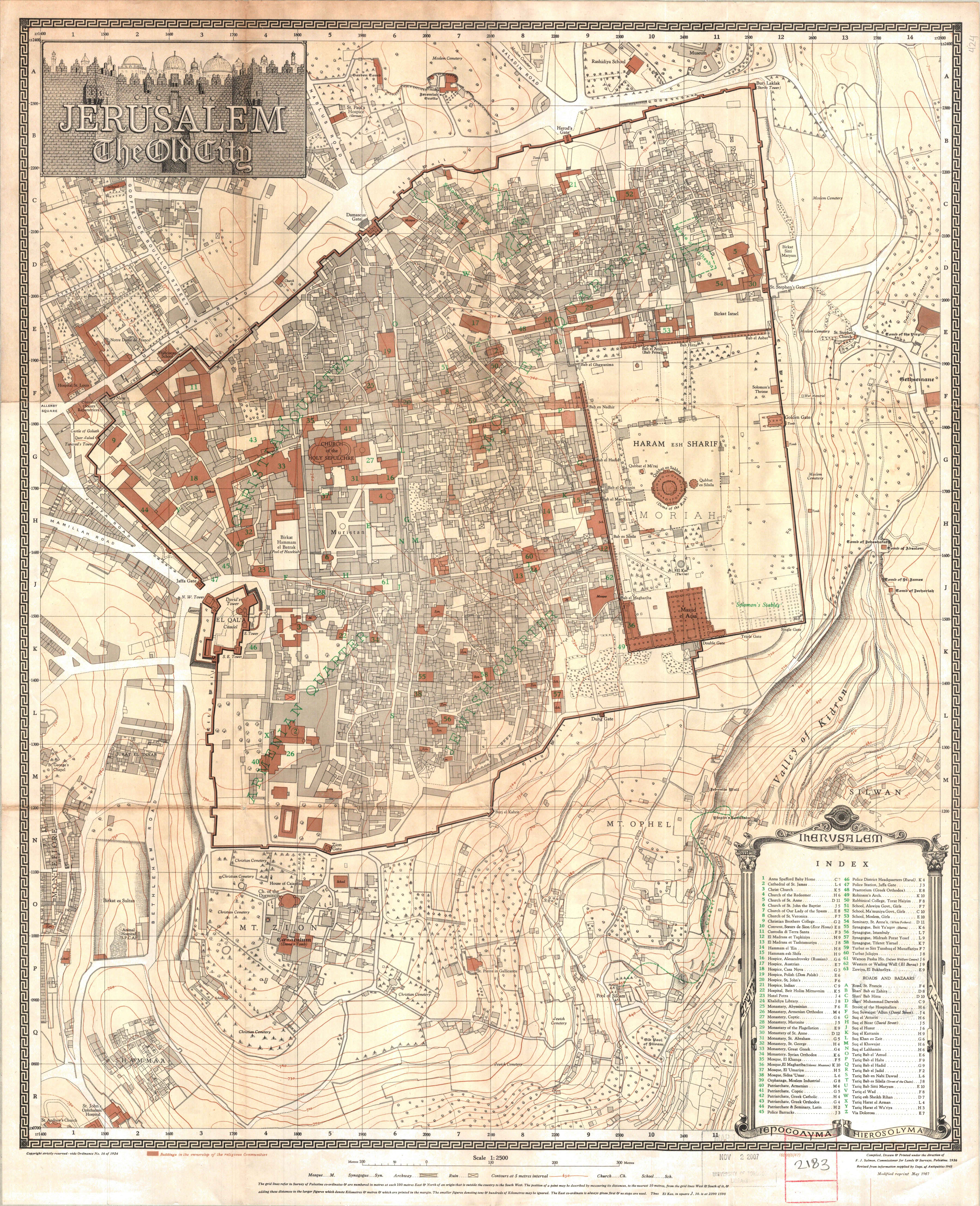
Currently, there are a lot of tensions because of a particular land deal that was conducted illegally on behalf of the Armenians with the Israelis, specifically Israeli Jews. In the Old City there are four quarters: the Muslim, the Jewish, the Christian and the smallest is the Armenian. But they’re not strict lines now of where each community is found. The Armenian Patriarchate owns these lands and they sell it out to Jewish Israelis, to Muslim Palestinians, Christian Palestinians, Armenians, and so on. There was a plot of land that in Armenian is called Goveru Bardez, which means the Garden of the Cows, and right now it's a parking lot.
Under that place actually, an Armenian church was found, which is very unfortunate because it was probably found under four or five years ago. But it was found because the Armenian real estate manager and the Patriarchate made a deal with an Israeli Australian Jew who allegedly wants to build it up as a hotel. The real estate manager and the Patriarchate did not consult the brotherhood – all of the priests – when making this decision, which is how it should go according to Ottoman law. The Armenian church still goes through Ottoman law, as do all of the Christian communities in the Holy Land. So that contract should not have taken place to begin with, but it did. And right now there are a lot of legal disputes between the Armenians and the Israeli bodies involved.
But this isn't the first time. This is perhaps the largest case, because it's 20% of the quarter. Even though the Armenian quarter is the smallest, it's still a decent plot of land. And if you keep on taking chunks of that away, the Armenian community becomes less, and less, and less, and the presence becomes less, and less, and less.
Unfortunately, there are a lot of issues with this, even though there are sufficient resources and documents showing that there were all sorts of different people living in the land. Throughout all times during history, there are the efforts to try to amplify yourself and to remove the presence of some cultures. So, that takes me to the point where the church was found under that plot of land, and now it's covered up in cement. And I don't know when the next time it's going to see sunlight again, sadly.
So, the Armenians have had issues with the Israeli authorities prior to this particular issue, whether it was Armenian-owned land outside of the Old City that was taken over in '67, or '48, or whenever. Right now it's definitely a lot more amplified and it's getting a lot more news attention.
You mentioned Israeli citizens having a lot of privileges. Are all the Armenians in Jerusalem Israeli citizens?
No, some of them still hold on to Jordanian citizenship, some of them do have Israeli citizenship. Some are American. Some have other passports, so it's not just that everyone has Israeli citizenship.
Can you clarify a little bit historically? You mentioned Jordanian citizenship, and other challenges in '67 and '48. Could you tell me about that?
East Jerusalem was controlled by the Jordanians and West Jerusalem was controlled by the Israelis after '48. But then in '67, the Jews claimed ownership of Jerusalem completely, and they called this the unification of Jerusalem. So, in '48, there was one Armenian village outside of the Old City that was completely destroyed by the Israelis. They had a church, and it was completely destroyed, and all of the men were killed. It wasn't the largest village, but it was a community that had lived there for years and years, and it was just destroyed. And that was seen a lot during the process of the creation of the state, which makes sense. It's unfortunate, but it's not exclusive to the Middle East. That's just unfortunately how it goes.
Some Armenians after ’48 consented to Israeli citizenship, and so they became citizens. Within the Old City, Armenians used to have a lot more land. We had the majority of Jaffa Gate at that time, which is one of the seven gates of the Old City, and one of the ones that are most used.
So Jaffa Gate used to be controlled by both Greeks and Armenians, but then they were ordered to leave these buildings, and they didn't really have much of a choice. And it was taken from them with this new set of laws, in a new language that they perhaps weren't so familiar with. I'm not saying that Armenians and Greeks didn't know Hebrew before '67, but it's a bit still foreign because it's only propped up within the Jewish communities. So communities at that time, and still now, operate more so in Arabic because that's just the common language that everyone knows.
So right now, for example, when you go through Jaffa Gate, you walk straight, and you see a police station. And all of the buildings to the left of it are all Armenian-owned, but prior to '67 this police station wasn't there, and it was traditionally where all the orphans were placed after the genocide, so it's outside of the convent walls. But right now it's a police station, and there's not even a sign explaining the history of this building. So that ties into what I was saying; you try to limit other groups' presence to try to justify your own.
So, a lot of Armenians fled in '48, but more so in '67 because at that point they had seen 20 years of war, and who wants to live in that? Even though Jerusalem is very rich, I don't think people would choose to live in a war rather when they have the option to go and live in comfort, live like normal people instead of having to worry about being sent out of their homes and listening to a language that has negative associations and that they don't necessarily understand.
Can you tell me some of the day-to-day challenges of living in Jerusalem, particularly in your community?
My dad tells us that when he had newly arrived to Jerusalem in the early 90s or so, all the Jews who lived in the Old City were hip, secular, cool, artistic types of people. Because it was cool to live in antiquity like that. But the only thing I've ever known, the only Jewish neighbours I've really had were religious ones that didn't really want to talk to me. We would have tensions; not specifically with me, but with my community. And it's very visible who's Jewish, who's Muslim, who's Christian. The Old City is very important for all three religions, but specifically Jews, and it makes sense that more religious people would start moving in.
And specifically I'm referring to Jews in this context because the other people who have lived in the Old City have lived there for generations. Aside from one or two families that are Jewish, that's not the case with the Jewish side of the Old City.
Some Armenians make a lot of efforts to integrate into Jewish Israeli society, but others just don't have that accessibility. Because they live in Arab spaces that don't promote that, or their parents don't choose to put them into places like those, or they don't want to be put in places like those, or they just don't have the resources to be put in places like those.
And you can't plop someone who doesn't speak the language and who's had negative experiences with people into a community of people who don't share any common languages. It's just difficult. So there's the issue with language. A lot of the Armenians do speak Hebrew, but not to a very good standard. And to the point that it's clear to Jews that they're not Jewish.
And that just disadvantages them socially or are there services that they can't access because they don't speak Hebrew?
Well, I'm referring to socially. The advantages depend on whether or not you have Israeli citizenship, but I’m talking about socially. So, by the way you dress, you're already separated into a box and that makes a lot of your neighbours less likely to want to socialise with you, to communicate with you. Not being able to speak their language also puts you at a disadvantage. The religious Jews are not necessarily keen on secular Jews either, they only marry in their community. They only mainly interact with people of their kind, at least in the Old City. Elsewhere it's different, because there's a lot more communication that happens between the different communities, but in the Old City it's a lot more tense, because you feel it right there, the fights that you're having are for something that's two metres in front of you. The taking of properties throughout all of the gates and all of the areas in the Old City, it's right in front of you.
I don't have this issue, but Armenians are very colourful people, and a lot of the boys would be stopped by policemen and asked to show their ID and whatnot, just because they're darker and they speak Hebrew with an accent. Armenian boys usually speak Arabic better than they do Hebrew, which is mostly the case because a lot of Armenians have married into Arab Christian families because there's no one else to marry. So they form families with Arab Christians, and they don't speak Hebrew with the proper Israeli accent, and they perhaps don't understand everything the first time. And they're stopped and sometimes interrogated just for going home from buying bread or hanging out with friends outside of the Old City. I've never had this issue because I don't look Arab, nor do I speak Hebrew with an Arab accent, but just because that's not my experience doesn't mean that it's not my community's experience.
There are the army police and border police, and there are the regular police force, and they collaborate in the Old City. It’s sad, because you'll have a lot of these 18 year olds who are pumped to have authority over grandmothers and grandfathers and young kids and adult men and women. They're not aware of the cultural context that other people share in the same place, so they approach situations in ways that are more violent and aggressive.
But, the funny thing about the actual police force in the Old City is that a lot of them are Druze, and Druze speak Hebrew and Arabic, and are very integrated into Israeli society. They serve in the army and whatnot, they speak Hebrew properly, they know about all the holidays and traditions and the mannerisms. Besides someone's name, you wouldn't be able to tell the difference between a Druze and a Jew. They're placed there because they speak Arabic, they understand the culture and the context. They're put there to act like a neutral force. But it doesn’t really work that way, because of who they’re ultimately working for. You can't go against the system that easily, you can't fight it, you can't try to defend yourself in a way that you come out as correct or innocent.
And how, more generally with the situation in Jerusalem, have things changed before and after the 7th of October?
I haven't been home consistently since the 7th, but prior to then, there have always been tensions. Before there was definitely less racism and extreme views held by regular people. The police force was already amped up, the government was already amped up, but when I was home last time, I would see a bunch of signs in the Old City that were very dangerous and violent towards non-Jewish groups, like graffiti and banners that were put up. People's views… they call now for a bunch of different horrific things, whereas before they would approach the whole thing with more critical thinking. The day that I arrived, on the bus stop, there was graffiti saying ‘death to Arabs’. There were things like that before, but right now it's a lot more. A few years ago I saw ‘death to Arabs and their Armenian friends’. But that was definitely less before the 7th. Right now, everyone's seeing news, hearing things. They all have friends who have been affected one way or another. Everyone really has been affected, not just Jews. Christians, Muslims, everyone. Everyone's been affected by the 7th, and it's been continuing for years now. It's grown so much more than just internal politics, whether you consider Gaza internal or not. It's branched out to Syria, to Iran, Lebanon, Jordan. Socially, people's perspectives are turning a lot more extreme. And what I do like to see is more opposition towards the government, but that can also exist with heightened racism towards other people. The government has really failed everyone. Which is kind of expected when you have that type of government.
It doesn't sound like a particularly easy life there. You have American citizenship. There's already a big Armenian community in America. Have your family ever considered leaving Jerusalem? Why or why not?
My dad asked my maternal grandfather before he married my mother if he wanted to leave, because my father could have taken my whole family that was in Jerusalem to the States. But my grandfather refused to, because Jerusalem was his home. He wanted to be buried there, and he had nothing to do in America. All of his work, all of his life, all of his people were in Jerusalem, so he did not want to leave. My dad respected that, so we all stayed in Jerusalem.
It's not easy just packing up and going. Jerusalem is not just… the history there, you can't remove yourself from it. You could, but it's not as easy as moving from one small town to another, or one city to another. There's cultural significance. There's historical significance. There's so much that goes into being from Jerusalem. And many people want us to leave, but you know, even more reason to stay. But that's not the main reason we aren’t leaving. My family doesn't stay because we want to prop anyone up any certain way. We stay because that's our home, and that's all we've known, and you're killing a side of you that you will never be able to get back if you do leave.
Considering that then, what are some of the privileges of life there, the things that make it worth staying for?
Well, the privileges and the things that make it worthwhile are two different things. I wouldn't say that they're the same thing. It's great being able to have access to healthcare. It's great being able to have access to great universities if you're a citizen and speak the language. There are great opportunities for all sorts of things. The Israeli system is a very good system. So those are privileges. But the things that make it worth staying for is all of the rich culture, all of the rich traditions that you see in front of your eyes, all of the history that you get to consume every day just walking down the street. That makes it worth all of the struggles that go on, because it's not just me and my family who's living there. It's me and my family, my grandparents who I never really got to grow up with. My great grandparents who built a life here from nothing. So it’s my community, those who came before me and those who will come after me. It's not individualistic at all. There's something that calls you that's more than material things, which makes it worthwhile staying, regardless of how difficult it could get.
My great grandfather arrived in Jerusalem because he was more of a religious man who would attend church every morning. He really held on to what it meant to be an Armenian, and the church really helped him establish himself. He was married before the genocide, and his wife… there were complications, so he ended up remarrying, because a priest in Constantinople told him to take this orphan, go to Jerusalem and get married. So he met his wife and ultimately my great grandmother through the church. He was given a community in Jerusalem because of that priest in Constantinople, and the community grew because of that whole shared experience with the genocide. It was ultimately the same thing that happened to everyone. So, my great grandfather had a lot to be thankful for, and where he ended up and ultimately where I ended up was because of everything that went on. My great grandparents gave me a very rich life, because I am an Israeli citizen, and I do have a family that emphasises education and making yourself respected and contributing to the community.
So how do you think your experience being the great granddaughter of refugees who fled to Jerusalem impacts the way that you see other trends and events in the region?
I think that it fuels a lot of my desires and career choices, and which spheres I choose to put myself in. Because I'm interested in genocide studies, and I'm interested in conflicts that unfortunately escalate to the extinction of an entire people. The reason why I'm so interested in it is because it's in my DNA, it's in my family, it's what I was born and raised with. So I'm proving things to myself, to my community, and to my family who I haven’t met and who never had the chance to live, because I know what it's like to be affected by things.
How do you think that experience impacts the way that you see other groups in the region who have faced those challenges and those who are still facing those challenges?
So, to begin with the Jewish Israeli side. I worked at the Holocaust Museum for two years. I've learnt so much during my time there, and I've made really great connections and friends during that time, because we all had the common desire to revisit that history and to emphasise how important it is to keep that in memory and what it means for the current generation, the future generations, the older generation. So in that sense, I think there's a lot of awareness that I have that other people do not necessarily have. Because I faced it every day and I interacted with it every day, and I was interacting with people who had the same values as I do. I don't think many people have that experience. So, that's always in my mind, and you can definitely understand why people act the way that they do and how people right now think because of what happened in the past.
For the Arabs, it's unfortunately a present issue. There is a system that discriminates, and it is happening in front of us, even if it might be categorised as something not as atrocious. Whether you rephrase it or not, there's ultimately injustice going on. It's a continuous, present issue when it comes to the Palestinian communities. So all of us, it's a weird triangle of the same thing happening to us, but in different ways at different times, and that's influenced all of the different communities in this location. So I think I've been lucky to understand many of the attitudes going on, even though it's sometimes difficult to accept.
Can you say more about your experience going from Jerusalem to Europe and how things compare in the last few years that you've spent in Europe?
There is a major decline of religious importance. Ethnic as well. So I’ve been categorised as religious or strict even though to me, this is just how everyone behaves back home, and I have certain values, and there are certain things that I wouldn't do but others would. Some people would say that it's more free, but I'm not of that view.
What is your view?
I don't think that indulging yourself in whatever you want to do is necessarily the wisest idea, whether you feel it in the moment or not. I was just raised in a different way to other people in Europe, in the Western Hemisphere.
Would you like to stay in Europe?
I don't know what's going to happen. It's definitely a more secure place to live, you're not having bombs thrown at you and you're not having issues based on your religion or ethnicity. Or at least, you're not having the same types of experiences that you would have in the Middle East in Europe or anywhere else. So I don't know what's going to happen. I'm just hoping that I'll find a nice job, wherever that may be.
You've also spent a few summers in Armenia proper, the state. How close does that place come to feeling like home to you and feeling like your culture?
I do feel a connection to Armenia, but it's not in the way that the people remind me of home, or the places remind me of home. It's the whole notion that these are my people. Even though they do share differences. These are my churches that my ancestors built. It's the whole ‘Imagined Communities’ concept. So I do feel attached to it, but it doesn't necessarily feel like home to me. You could still be attached to something and not feel at home with it. I did spend a few summers in Armenia, and I do feel like it's a very familiar culture, but it's not the same Armenian that I grew up with. There, they don't do things that are regular in Jerusalem or in the Levant, because they grew up in different circumstances. More Russian versus more Middle Eastern.
Do you like it there as a place?
I do like Armenia. I think there's a lot to improve, but everywhere has issues, right?
Do you think you would ever want to live there?
If the opportunity came up, I would, but given everything that's going on right now, I wish it was under different circumstances. But if I had a proper placement there logistically, why not? My heart would say ‘yes, I want to go and live in my homeland’, but it's not really the same. And my heart isn't 100% set on it. Perhaps part of me is saying yes, go and live in your homeland, but another part of me is saying that it’s not really my homeland.
Speaking of your homeland, do you feel any desire to return to the places that your great grandparents and the rest of your family are from, which are now mostly part of Turkey? Do you feel any desire to go back there, given that those communities aren’t in that land anymore?
I do, and I definitely will. It is a trip that I look forward to, but I also dread it, because I would get very emotional, and it would be very difficult to process things. I don't think that I'll ever reach the emotional maturity to actually process it. I wish I could go and see how my great grandparents lived, or at least how that would have developed, but it's not the reality so I can't fight that. I do want to go, it would just be difficult. All the places where my family were from, there was a very strong Kurdish population. Right now if I go, it's mostly Kurds there. There are maybe a few Turks, but it’s not as common. So it would be great to see them and how they're continuing to live, and even interact with them and see if there was an older person who could tell me things that they recall about their parents or grandparents talking about Armenians and how they used to live with them. That would be wonderful, but it would be a lot of emotional strain on me.
So by the sounds of it, your culture in your perspective isn't just the individuals, it's also the place.
Yeah. It's all of the folklore, it's the same locations that are being described, it's all of the music about the wind and the mountains and the water. It's not just people, it's all of the culture that was born there, and all of the pain that has been felt there that I feel like still influences me today.
Do you have any examples of something culturally unique about that place that no longer really exists?
Well, yes. Unfortunately, during the genocide, a lot of Armenian culture was slaughtered away with the people. So a lot of the Armenian culture that is familiar to me is from during or after the genocide. While there were efforts by multiple people to preserve it, a lot of it was lost. So a lot of the culture that is natural to me is about the genocide, and things that went on during that time. But there definitely still is culture from before, and a lot of that is in the church. The Armenian church goes way back. It doesn't even conduct itself in the modern Armenian language, they conduct themselves in Krapar, which is an older version of the Armenian language. And every Armenian church has its foundational layout where it faces a certain way, and there are certain artworks, and designs within those artworks that symbolise things. I want to be able to see the rivers and the mountains that are described to us in lullabies and songs. It's all there. I just wish the people were there too.
You clearly have more of an attachment to the Armenian side of your heritage than the American side. Could you say something about why you think that is?
My dad adopted a lot of the Armenian Middle Eastern culture. But also it is my opinion that Armenian culture surpasses American culture by so much. The quantity, how much culture, how much history there is. My house predates Columbus' voyages. My Armenian community has been in the Holy Land for far longer than America has existed as a state. It’s just something I'm not as attached to. I find myself completely excluded from Americans, both physically and emotionally and in the way that I think from.
Okay. Beyond all of the cultural aspects, what do you have going on in your life? What are you busy with at the moment? What are you hoping to do in the future?
I am going to start my Masters of Law, also in Europe. So that's exciting. I chose to do that because initially I wanted to do a Masters in Genocide Studies, but practically there's less opportunity with that. So, being the Middle Eastern girl from a Middle Eastern family… ‘go into law, become a doctor, be an engineer’. So law was mine, and I'm excited to start that. I hope to learn about things that relate to injustices like genocide, ethnic cleansing, forced migration. So, I hope to work within that field where I can try to raise awareness about what it means to go through all of those things and how it affects different generations.
Last question. Can you tell me about one artist from your culture you particularly like? A musician, painter, photographer, writer, anybody with creative work.
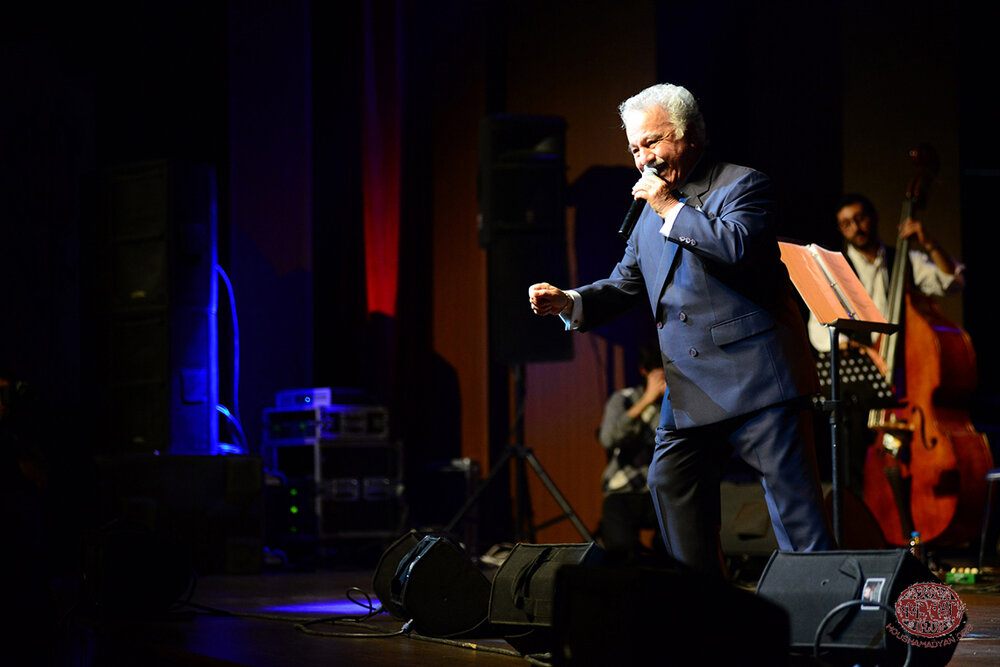
I really enjoy listening to music and hearing poetry in different Armenian dialects. I really like Onnik Dinkjian, the one who sings in the Dikranagerd accent. Onnik, like Gomitas who is recognised as one of the pioneers of ethnomusicology, is recognised in my generation as Armenian dialectic music revival. I really appreciate those who make the efforts to revive everything before the genocide, because so much was left out. It's a real problem, because you shouldn’t base your identity off of something that happened a hundred years ago when you've had the privilege of having a history worth five thousand years. And I think it's important to consider all of those thousands of years instead of just the painful ones that happened recently. So Onnik Dinkjian. He's an old man who speaks with his Dikranagerd accent. And he's one of the few people that actually still speak that dialect sadly. His son is also in the business as well. He plays the Armenian or Middle Eastern guitar, the oud. And their melodies make me feel more connected to what should have been my home and what is my home right now.